

THE BUYER'S GUIDE / SELECTION
Choosing Hydroxypropyl Methyl Cellulose HPMC: Grade, Form and Application Requirements
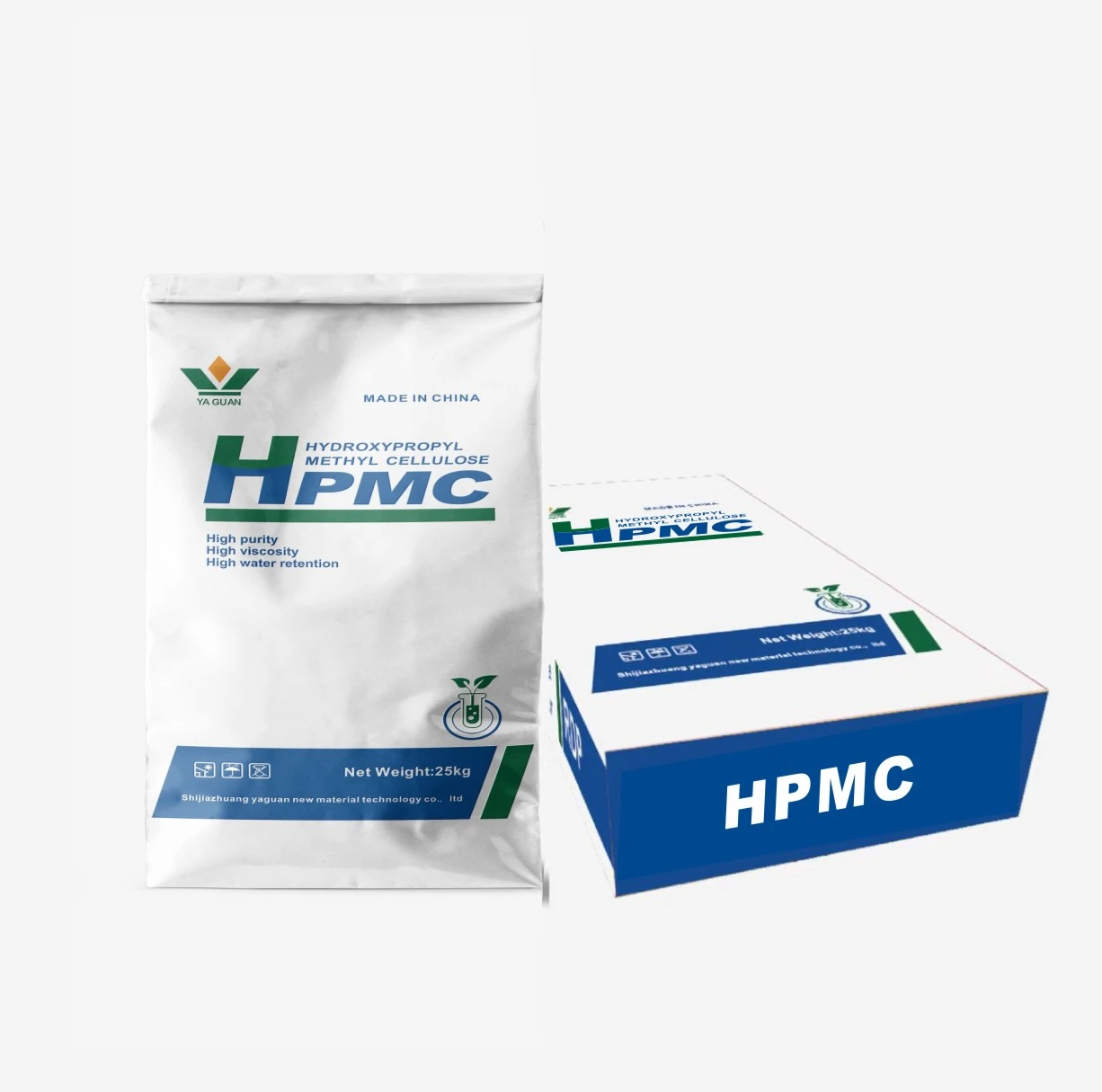
A buyer-focused guide to selecting hydroxypropyl methyl cellulose HPMC for cement- and gypsum-based construction materials. It explains how to read the published specification of Shijiazhuang Yaguan New Material Technology Co., Ltd.'s Hydroxypropyl Methyl Cellulose (HPMC), what each parameter means for a purchase decision, and which points still need confirmation before ordering.
Application fit: water retention, workability, bonding and anti-slip needs in cement- and gypsum-based mortars
Viscosity of a 2% water solution, published range 50000–200000 (confirm unit and test method)
Substitution: hydroxypropyl content 4.0–12.0% and methyl content 19.0–30.0%
Gel temperature 60–90℃ compared with process temperatures
Water retention rate ≥92%
Physical properties: white powder, fineness (100 mesh >96%), packing density 370–420 g/L
Chemical compatibility: pH 5.0–8.0 (25℃), ash content 3.0–5.0%
Optical properties where relevant: light transmittance ≥70%, whiteness ≥75%
Choosing Hydroxypropyl Methyl Cellulose HPMC: Grade, Form and Application Requirements
If you buy hydroxypropyl methyl cellulose HPMC for building materials, the main question is whether the product's published specification fits your formulation and your application. This guide explains how to check the Hydroxypropyl Methyl Cellulose (HPMC) offered by Shijiazhuang Yaguan New Material Technology Co., Ltd. against your requirements. It only covers what the confirmed product specification supports.
Start with your own requirements
Before you compare any supplier data, write down:
- The application. For example, cement-based mortar, gypsum-based material, or another system.
- The problem you need to solve. For example, water retention, workability, sag or slip resistance, or bonding.
- Your acceptance limits. For example, the viscosity range, particle fineness, pH and appearance your process can accept.
- Your test method. Know how you will check incoming material, so the results can be compared with the supplier's figures.
With these points written down, the specification table becomes a checklist instead of a list of numbers.
What the product is
According to the published product information, Yaguan HPMC is a non-ionic cellulose ether. It is described as an odourless, tasteless, non-toxic white powder that is soluble in water and most polar organic solvents. Its aqueous solution is described as surface-active, highly transparent and stable in performance. The listed functional characteristics include thickening, bonding, dispersing, emulsifying, film-forming, suspending, adsorbing, gelling, surface activity, water retention and colloid protection.
Application fit: construction mortars and gypsum
The product description names these advantages for building materials:
- It increases water retention. This helps protect cement and gypsum from poor solidification and cracking caused by drying too fast or by too little mixing water.
- It increases mortar plasticity, which improves workability and working efficiency.
- Because the mortar is more plastic, it performs better when binding construction materials.
- Because it thickens the mortar, it helps stop mortar from slipping off the surface it is applied to.
If your main need is one of these, this product is a relevant candidate. For applications not covered here, the product information above is not enough to support a selection decision, so ask for application-specific data first.
Reading the published specification
| Index | Unit | Standard specification |
|---|---|---|
| Appearance | - | White powder |
| Hydroxypropyl content | % | 4.0–12.0 |
| Methyl content | % | 19.0–30.0 |
| Viscosity | 2% water solution | 50000–200000 |
| Ash content | % | 3.0–5.0 |
| Gel temperature | ℃ | 60–90 |
| Light transmittance | % | ≥70 |
| Whiteness | % | ≥75 |
| Packing density | g/L | 370–420 |
| pH value (25℃) | - | 5.0–8.0 |
| Degree of fineness | mesh | 100 mesh, >96%; 80 mesh, >100% (as published) |
| Water retention rate | % | ≥92 |
How to use these figures when buying
- Viscosity. The published range is wide (50000–200000, measured as a 2% water solution). The table does not give the viscosity unit or the measuring method. Tell the supplier your target viscosity, and confirm the unit, the instrument and the test conditions before you compare it with other hydroxypropyl methyl cellulose ether products.
- Substitution (hydroxypropyl and methyl content). These ranges describe the chemical make-up of the cellulose ether. If your formulation was developed with a specific substitution level, ask which value inside the range will be supplied.
- Gel temperature (60–90℃). Check this against the temperatures your mixing and application process will reach.
- Water retention rate (≥92%). This figure relates directly to the water-retention advantage described above. Confirm the test method so you can check it with your own incoming inspection.
- Fineness, packing density and appearance. These affect how the powder handles, doses and disperses in dry-mix production. The fineness entry is reproduced as published. Ask the supplier to clarify it if particle size matters for your process.
- pH (5.0–8.0) and ash content (3.0–5.0%). Check these against your formulation's compatibility requirements.
Grade and form: what the materials do and do not cover
The product is supplied as a white powder, with the specification ranges above. If you need a particular viscosity point within the range or a modified grade, confirm it with the supplier in writing, along with a matching specification sheet.
Price, packaging, lead time and certification
Include your application, target viscosity, order quantity and destination market, so the quotation can be based on the specification you actually need.
When this recommendation may not apply
- Your application is outside the building-material uses described above, and you have no supporting data.
- Your required viscosity, substitution level, pH or gel temperature falls outside the published ranges.
- You need documented certifications, food or pharmaceutical suitability, or specific regulatory approvals. None of these is covered by the material here.
Summary checklist
- Define your application and the performance problem you need to solve.
- Compare your limits with the published specification ranges.
- Confirm the viscosity unit and the test methods.
- Agree in writing on the specific grade or viscosity point.
- Request price, packaging, lead time and any required documents separately.
- Test samples in your own formulation before you approve the material.
THE PEOPLE

About the author
THE COMPANY
Shijiazhuang Yaguan New Material Technology Co., Ltd.
Shijiazhuang Yaguan New Material Technology Co., Ltd. is an industrial and trade integration enterprise with profound strength in the research, development, production, sales and service of fiber ether products.The company has a total investment of 1 2 0 million yuan, a factory of 1 0 0, 0 0 0 square meters, and 4 production lines, with an annual output value of up to 20,0 0 0 tons.Its products are widely used in building materials, washing and daily chemical, coatings and other industries.the products are sold…
About Us ↗Visit company website ↗YOUR NEXT STEP
Bring your brief. Start a useful conversation.
Use case, specification, quantity and delivery window: make the next conversation specific.