

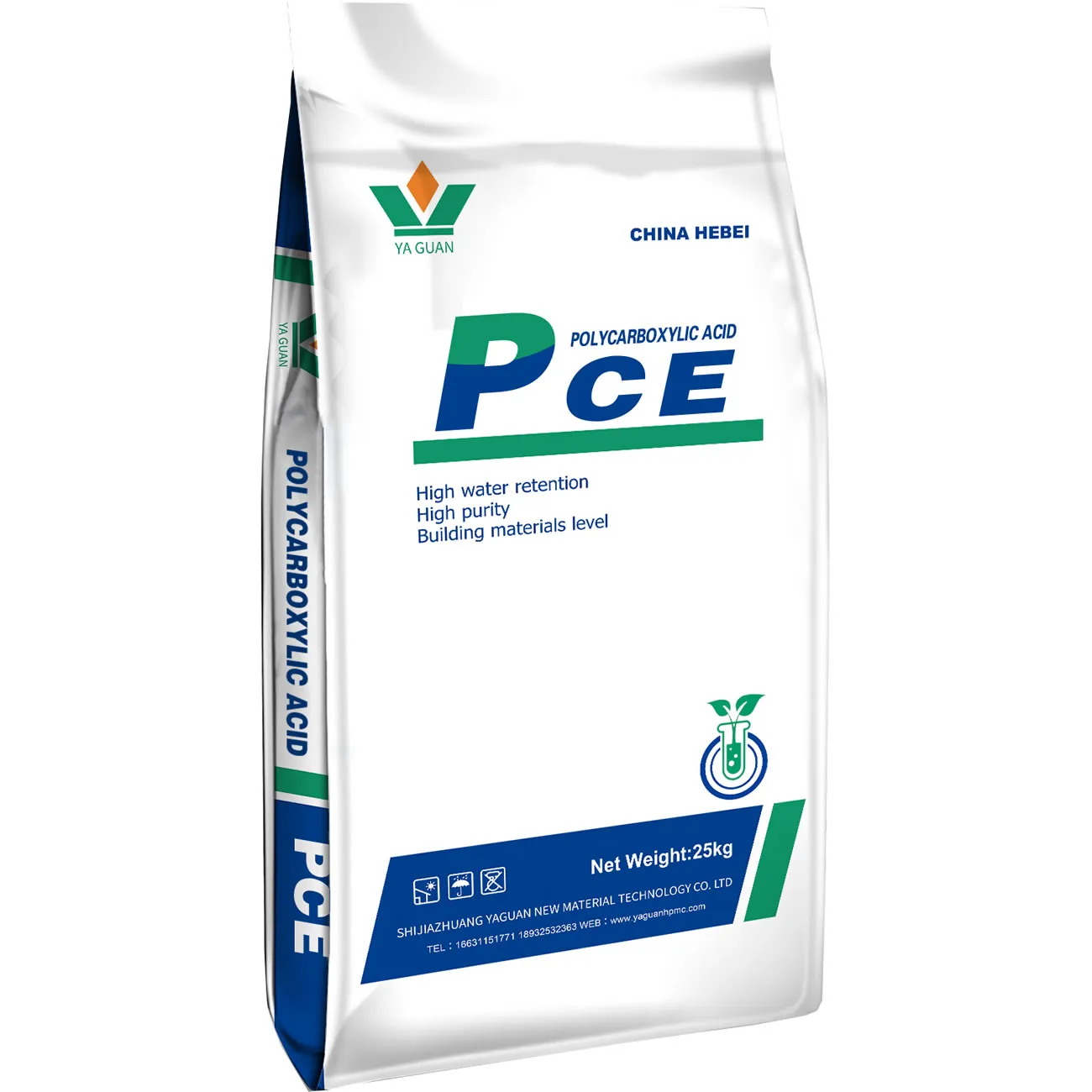
Introduction to High-Performance Concrete Admixtures and Industry Trends
The global construction industry is experiencing an unprecedented demand for high-performance concrete (HPC) solutions that deliver superior durability, extended workability, and enhanced mechanical properties. This evolution is driven by mega-infrastructure projects, sustainable construction mandates, and the increasing need for resilient structures in challenging environments. Central to achieving these advanced concrete characteristics are sophisticated chemical admixtures, particularly superplasticizers. Among these, polycarboxylate ether (PCE) based superplasticizers have emerged as the leading technology due to their exceptional dispersion and slump retention capabilities.
Market trends indicate a sustained growth in the demand for long-slump retention admixtures. With extended transportation distances for ready-mix concrete, challenging weather conditions, and complex pour geometries, contractors require concrete that maintains its workability for prolonged periods without significant water content adjustment or loss of strength. The focus is shifting towards admixtures that offer not just high water reduction but also predictable slump flow and retention, crucial for operational efficiency and structural integrity. This drives the innovation in polycarboxylate chemistry, leading to advanced formulations like PC-826 Slump Retention Polycarboxylate Superplasticizer, designed to meet these rigorous industry demands by optimizing concrete rheology and setting characteristics.
Further trends include the increasing adoption of self-compacting concrete (SCC) and ultra-high-performance concrete (UHPC), which rely heavily on advanced superplasticizers to achieve their unique flow and strength properties. Sustainable construction practices also necessitate admixtures that enable the use of supplementary cementitious materials (SCMs) and recycled aggregates, often requiring specialized chemical interactions to maintain concrete performance. The development of products like PC-826 is a direct response to these evolving needs, offering solutions that enhance concrete performance while supporting sustainable building practices.

Manufacturing Process of PC-826 Slump Retention Polycarboxylate Superplasticizer
Materials and Synthetic Pathway
The synthesis of advanced polycarboxylate superplasticizers like PC-826 Slump Retention Polycarboxylate Superplasticizer involves a meticulously controlled polymerization process, utilizing specific monomers to engineer a comb-like polymer structure. Key raw materials typically include:
- Main Chain Monomers: Primarily acrylic acid (AA) or methacrylic acid (MAA), providing carboxylic groups crucial for electrostatic repulsion and adsorption onto cement particles.
- Side Chain Monomers: Polyoxyethylene (EO) macromonomers, such as polyoxyethylene alkyl ether (APEG) or polyoxyethylene methacrylate (HPEG), which form the backbone's long side chains. These side chains create steric hindrance, preventing cement particles from flocculating and thus maintaining slump.
- Initiators: Water-soluble free-radical initiators (e.g., persulfates or redox systems) to trigger the polymerization reaction.
- Chain Transfer Agents: To control the molecular weight and molecular weight distribution of the polymer, optimizing its performance.
Detailed Manufacturing Process Flow
The production of PC-826 Slump Retention Polycarboxylate Superplasticizer follows a precise multi-stage batch or semi-batch polymerization process to achieve its unique molecular architecture:
- Monomer Preparation: Precise quantities of acrylic acid, polyoxyethylene macromonomers, and other co-monomers are measured and mixed according to specific formulation ratios. This step is critical for defining the final polymer's characteristics.
- Initiator and Chain Transfer Agent Dosing: The initiator solution and chain transfer agent are prepared and carefully introduced into the reactor at a controlled rate, ensuring optimal reaction kinetics and polymer chain length control.
- Polymerization Reaction: The blend is typically heated in a stirred reactor under controlled temperature and atmospheric conditions (often inert atmosphere) to initiate free-radical polymerization. This process can be solution polymerization or emulsion polymerization, carefully monitored for reaction progression. Advanced techniques, like controlled radical polymerization (e.g., ATRP or RAFT), may be employed to achieve narrow molecular weight distribution and precise comb-polymer structures, crucial for superior slump retention and dispersion efficiency.
- Cooling and Neutralization: Once the polymerization is complete, the reaction mixture is cooled. The resulting polycarboxylic acid solution is then neutralized to a target pH using an alkaline solution (e.g., sodium hydroxide) to ensure stability and compatibility in concrete mixes.
- Filtration and Purification: The product undergoes filtration to remove any unreacted residues or impurities, ensuring a clean and consistent final product.
- Quality Control and Standardization: Samples are taken for rigorous quality control testing (viscosity, solid content, pH, water reduction rate, slump retention, air content). The product is then adjusted to meet precise specifications, often through dilution or blending, before packaging.
- Packaging: The finished liquid or powdered PC-826 Slump Retention Polycarboxylate Superplasticizer is packaged into appropriate container111s for distribution.
Testing Standards and Target Industries
Our manufacturing process adheres to stringent international quality management systems, including ISO 9001:2015, ensuring product consistency and reliability. Performance testing conforms to standards such as ASTM C494 (Standard Specification for Chemical Admixtures for Concrete) and EN 934-2 (Admixtures for Concrete, Mortar and Grout - Concrete Admixtures - Definitions, Requirements, Conformity, Marking and Labelling). These standards ensure that PC-826 Slump Retention Polycarboxylate Superplasticizer meets the required performance metrics for water reduction, setting time, and slump retention.
The inherent advantages of such a precisely engineered superplasticizer extend its service life within concrete systems, maintaining performance even after prolonged exposure. Target industries include: construction (ready-mix, precast, site-mixed concrete), infrastructure development (bridges, tunnels, high-rise buildings), and specialized concrete applications (self-compacting concrete, high-strength concrete). In these scenarios, its application demonstrates significant advantages:
- Energy Saving: By significantly reducing the water-cement ratio, less energy is required for mixing and vibrating concrete, and improved flowability allows for faster, more efficient placement.
- Corrosion Resistance: A lower w/c ratio leads to denser concrete with reduced permeability, enhancing resistance to aggressive chemical ingress (e.g., chlorides, sulfates), thereby prolonging the service life of reinforced concrete structures.
- Environmental Benefits: Enables the use of lower cement content and higher volumes of SCMs, reducing the carbon footprint of concrete production.
Technical Specifications and Performance of PC-826 Slump Retention Polycarboxylate Superplasticizer
Understanding the Polycarboxylate Mechanism
The efficacy of PC-826 Slump Retention Polycarboxylate Superplasticizer stems from its unique molecular structure: a comb-polymer architecture with a negatively charged backbone and long, non-ionic polyether side chains. Upon addition to concrete, the anionic carboxylic groups of the PCE polymer rapidly adsorb onto the positively charged surfaces of cement particles. This adsorption creates an electrostatic repulsion that disperses the cement agglomerates, releasing trapped water and significantly reducing the water-cement ratio while maintaining workability. Concurrently, the long side chains extend into the aqueous phase, creating a steric hindrance barrier between cement particles. This physical separation prevents reflocculation, ensuring prolonged slump retention even as the cement hydrates and consumes water. This dual mechanism of electrostatic repulsion and steric hindrance is what makes PCE superplasticizers vastly superior to traditional lignosulfonate or naphthalene-based admixtures.
Key Technical Parameters of PC-826
The following table outlines the typical technical specifications for PC-826 Slump Retention Polycarboxylate Superplasticizer, based on extensive laboratory testing and field applications. These parameters underscore its high performance and reliability for demanding concrete applications.
| Parameter | Specification (Typical) | Test Method / Standard |
|---|---|---|
| Appearance | Light yellow to colorless liquid | Visual Inspection |
| Solid Content | 40.0% ± 1.0% | ASTM C494 / EN 934-2 |
| pH Value (20℃) | 6.0 - 8.0 | ASTM E70 |
| Chloride Content | ≤ 0.02% | ASTM C1152 |
| Water Reduction Rate | ≥ 25% (typical range 25-35%) | ASTM C494 Type F / EN 934-2 T2 |
| Slump Retention | Retains initial slump for 1-2 hours | ASTM C143 / EN 12350-2 |
| Air Content (Concrete) | ≤ 3.0% (non-air-entraining) | ASTM C231 / EN 12350-7 |
| Dosage Range | 0.2% - 1.2% by weight of cementitious materials | Recommended dosage, adjust based on mix design |
These specifications highlight PC-826 Slump Retention Polycarboxylate Superplasticizer's capability to deliver significant water reduction while maintaining extended slump life, making it an ideal choice for complex and high-performance concrete applications.
Application Scenarios for PC-826 Slump Retention Polycarboxylate Superplasticizer
The versatility and superior performance of PC-826 Slump Retention Polycarboxylate Superplasticizer make it indispensable across a wide range of concrete applications where extended workability, high strength, and excellent durability are paramount. Its ability to maintain slump without excessive retardation or air entrainment is crucial for modern construction challenges.
- Ready-Mix Concrete for Long Haul Transport: In urban areas or remote project sites where concrete trucks may experience extended transit times, PC-826 ensures the concrete arrives on-site with the desired slump and workability, preventing premature stiffening. This minimizes the need for on-site water additions, which can compromise concrete quality.
- Hot Weather Concreting: High ambient temperatures accelerate cement hydration, leading to rapid slump loss. PC-826 effectively mitigates this effect by extending the open time of concrete, allowing for proper placement and finishing even under adverse temperature conditions.
- Large Volume Pours and Mass Concrete: For structures like foundations, dams, and bridge decks, large continuous pours are common. The extended slump retention provided by PC-826 facilitates smooth, uninterrupted placement of concrete over vast areas, reducing cold joints and ensuring monolithic integrity.
- Self-Compacting Concrete (SCC) and Ultra-High Performance Concrete (UHPC): These advanced concrete types demand extremely high flowability and stability without segregation. PC-826's potent dispersion and anti-segregation properties are critical in achieving the self-leveling and self-consolidating characteristics required for SCC and the exceptionally dense microstructure of UHPC.
- Precast Concrete Manufacturing: In precast operations, high early strength and a superior surface finish are essential. PC-826 allows for a reduced water-cement ratio to achieve higher strengths quickly, while its flowability ensures intricate molds are filled completely, leading to crisp edges and smooth, defect-free surfaces, often reducing vibration requirements.
- High-Rise Buildings and Complex Architectural Structures: Pumping concrete to significant heights or into geometrically complex forms requires mixtures with excellent pumpability and cohesion. PC-826 enhances these properties, ensuring consistent delivery and placement quality, which is vital for structural integrity and aesthetic appeal.
- Bridges, Tunnels, and Marine Structures: These infrastructure projects demand concrete with exceptional durability, low permeability, and resistance to aggressive environments (e.g., chloride attack, freeze-thaw cycles). By enabling very low water-cement ratios, PC-826 contributes to the production of dense, impermeable concrete that significantly extends the service life of critical infrastructure.
Technical Advantages and Product Comparison
Superior Technical Advantages of PC-826
The design and formulation of PC-826 Slump Retention Polycarboxylate Superplasticizer offer a suite of technical advantages that directly address the most pressing challenges in modern concrete production and placement:
- Exceptional Slump Retention: PC-826 provides prolonged workability, maintaining the initial slump for up to 2 hours or more without significant loss, allowing for longer transit times and placement windows. This reduces the need for re-dosing and minimizes concrete waste.
- High Water Reduction Rate: Achieving water reduction rates of 25-35% or even higher, PC-826 enables the production of concrete with very low water-cement ratios, leading to dramatically increased compressive and flexural strengths, reduced permeability, and superior durability.
- Optimized Strength Development: While extending slump, PC-826 does not significantly retard setting times, ensuring efficient early strength development crucial for accelerated construction schedules and precast applications.
- Improved Concrete Rheology: Enhances flowability, pumpability, and finishability, leading to easier placement, reduced labor, and a superior surface finish. It significantly minimizes segregation and bleeding, contributing to homogeneous concrete.
- Excellent Adaptability: Highly compatible with various types of cements (OPC, blended cements, sulfate-resistant cements) and supplementary cementitious materials (fly ash, ground granulated blast-furnace slag, silica fume), offering flexibility in mix design.
- Low Air Entrainment: Formulated to be non-air-entraining or to entrain minimal air, ensuring that desired air content can be precisely controlled with separate air-entraining admixtures if needed, preventing detrimental effects on strength and permeability.
- Enhanced Durability: The low water-cement ratio achieved with PC-826 results in a denser, less porous concrete matrix, significantly improving resistance to chemical attack (e.g., sulfates, chlorides), freeze-thaw cycles, and alkali-aggregate reaction (AAR).
Product Comparison: PC-826 vs. Conventional Superplasticizers
To highlight the advancements offered by PC-826 Slump Retention Polycarboxylate Superplasticizer, a comparison with older generation superplasticizers like Naphthalene Sulfonate Formaldehyde Condensate (NSF) and Lignosulfonates (LS) is instructive.
| Feature | PC-826 (PCE-based) | Naphthalene (NSF-based) | Lignosulfonate (LS-based) |
|---|---|---|---|
| Dispersion Mechanism | Electrostatic & Steric Hindrance | Electrostatic Repulsion | Electrostatic Repulsion |
| Water Reduction Rate | >25% (High to Very High) | 15-25% (Medium to High) | 5-15% (Low to Medium) |
| Slump Retention | Excellent (Long, >90 min) | Moderate (Short to Medium, ~30-60 min) | Poor (Very Short, |
| Effect on Setting Time | Minimal retardation (controlled) | Slight retardation | Moderate to significant retardation |
| Adaptability to Cements | Very Good (Wide range) | Good (Some sensitivity) | Fair (More sensitive to cement type) |
| Impact on Durability | Significantly improves | Moderately improves | Slightly improves |
| Cost-Effectiveness | High (Lower dosage, superior performance) | Medium | Low |
Vendor Comparison, Customized Solutions, and Application Case Studies
Strategic Vendor Selection for PCE Superplasticizers
When selecting a supplier for advanced chemical admixtures like PC-826 Slump Retention Polycarboxylate Superplasticizer, B2B decision-makers and engineers must look beyond just product specifications. A comprehensive evaluation should include:
- R&D and Technical Expertise: A leading vendor possesses robust research and development capabilities to continuously innovate and optimize PCE chemistry. They should offer profound technical support, including mix design optimization and on-site troubleshooting.
- Product Consistency and Quality Assurance: Strict adherence to international quality standards (e.g., ISO 9001) and consistent batch-to-batch product performance are non-negotiable for reliable project outcomes.
- Supply Chain Reliability: The ability to ensure timely delivery and consistent supply, even for large-scale projects, is critical. This includes strong logistics and inventory management.
- Regulatory Compliance and Certifications: Products must comply with relevant local and international construction standards (e.g., ASTM, EN, CE) and environmental regulations.
- Customization Capabilities: The flexibility to tailor admixture formulations to specific project demands, climatic conditions, or unique material combinations demonstrates a vendor's commitment to partnership.
- Years of Service and Reputable Client Base: A long history of successful projects and a portfolio of satisfied, high-profile clients serve as strong indicators of authoritativeness and trustworthiness.
Tailored Solutions with PC-826
Recognizing that no two construction projects are identical, we specialize in offering customized solutions leveraging the adaptable chemistry of PC-826 Slump Retention Polycarboxylate Superplasticizer. Our technical team works closely with clients to:
- Optimize Mix Designs: Based on specific cement types, aggregate characteristics, and desired concrete performance (e.g., target strengths, slump life, setting times), we help fine-tune dosages and admixture combinations.
- Adjust for Environmental Factors: Formulations can be modified to perform optimally in extreme hot or cold weather, or high humidity environments.
- Meet Specific Project Constraints: Whether it's rapid demolding for precast, extended pumpability for high-rise, or enhanced durability for marine exposure, our expertise ensures PC-826 delivers.
Application Case Studies
Case Study 1: High-Rise Residential Tower, Urban Environment
Challenge: A major urban high-rise project required continuous concrete pumping to significant heights (over 200m) with an average transit time of 90 minutes from the batching plant. The client faced issues with premature slump loss and pump blockages, leading to delays and increased operational costs.
Solution: After comprehensive mix design optimization with our technical support team, PC-826 Slump Retention Polycarboxylate Superplasticizer was incorporated into the concrete mix. The optimized dosage ensured a consistent slump life exceeding 120 minutes, even during peak summer temperatures. The enhanced rheology significantly improved pumpability.
Outcome: The project experienced a 25% reduction in pumping time due to consistent concrete flow, eliminating blockages. The quality of placed concrete was consistent from start to finish, leading to improved structural integrity and a 15% reduction in labor hours related to concrete placement, representing substantial cost savings and accelerated construction schedule.
Case Study 2: Large-Scale Precast Panel Production Facility
Challenge: A precast manufacturer needed to produce high-strength, aesthetically superior architectural panels with complex geometries. They struggled with achieving sufficient flowability to fill intricate molds without vibration-induced surface defects, while also demanding rapid early strength development for efficient demolding cycles.
Solution: Our team developed a custom mix design utilizing PC-826, tailored for their specific cement and aggregate combination. The superplasticizer's high water reduction capacity allowed for a very low w/c ratio, boosting early and ultimate strengths, while its superior dispersion created a highly fluid, self-compacting concrete. The extended slump retention also provided a wider window for precise placement.
Outcome: The use of PC-826 resulted in a 30% increase in daily production capacity due to faster demolding times (24-hour compressive strength improved by 20%). The surface quality of the precast panels significantly improved, virtually eliminating surface blemishes and honeycombing, reducing post-production finishing work by 40% and enhancing product marketability.

Trustworthiness, Support, and FAQ
Ensuring Trust and Reliability
Our commitment to our clients is built on a foundation of quality, transparency, and unwavering support. We understand the critical role our products play in your projects, and we back PC-826 Slump Retention Polycarboxylate Superplasticizer with comprehensive assurances.
- Quality Control & Certifications: All products are manufactured under strict ISO 9001:2015 certified quality management systems. Each batch undergoes rigorous testing to meet or exceed ASTM C494 and EN 934-2 standards.
- Lead Time & Fulfillment: Standard lead times for PC-826 typically range from 7-14 business days, depending on order volume and destination. We maintain robust production capacities and a global logistics network to ensure timely and reliable delivery. For urgent requirements or large-scale projects, expedited options and strategic stockholding can be arranged.
- Warranty Commitments: Our products are warranted to conform to published specifications at the time of shipment. In the event of any non-conformance attributable to manufacturing defects, we commit to replacing the product or issuing a credit, subject to our standard terms and conditions.
- Customer Support & Technical Assistance: Our dedicated team of concrete technologists and technical support engineers are available to provide comprehensive assistance, from initial product selection and mix design recommendations to on-site troubleshooting and performance optimization. We offer training sessions and detailed guides to ensure optimal product application.
Frequently Asked Questions (FAQ)
- Q: What is the optimal dosage range for PC-826?
A: The typical dosage range for PC-826 Slump Retention Polycarboxylate Superplasticizer is 0.2% to 1.2% by weight of cementitious materials. However, the precise dosage depends on specific mix design, cement type, aggregates, desired slump, and environmental conditions. We recommend conducting trial mixes to determine the optimal dosage for your specific application.
- Q: Can PC-826 be used with other admixtures?
A: Yes, PC-826 is generally compatible with other common concrete admixtures such as air-entraining agents, retarders, and accelerators. However, it is crucial to perform compatibility tests with the specific products and dosages intended for use, as interactions can occur. Our technical team can provide guidance on compatible admixture combinations.
- Q: Does PC-826 affect the setting time of concrete?
A: While PC-826 Slump Retention Polycarboxylate Superplasticizer is designed to extend slump retention, its impact on initial and final setting times is generally minimal compared to conventional superplasticizers, especially when used within the recommended dosage range. Slight retardation may be observed, but it is typically controlled and predictable, allowing for efficient project scheduling.
- Q: What is the shelf life and storage conditions for PC-826?
A: PC-826 typically has a shelf life of 12 months when stored in original, unopened container111s in a cool, dry place away from direct sunlight and frost. Ideal storage temperature is between 5°C and 35°C. Freezing should be avoided, but if frozen, the product should be thawed completely and thoroughly stirred before use without affecting performance.
- Q: Is PC-826 environmentally friendly?
A: PC-826 is formulated with environmental considerations in mind. Its high efficiency allows for reduced cement content in mix designs, contributing to a lower carbon footprint. It is non-toxic, non-flammable, and does not contain added chlorides, meeting modern environmental and health standards for construction materials.
Conclusion
PC-826 Slump Retention Polycarboxylate Superplasticizer represents a pinnacle in concrete admixture technology, specifically engineered to meet the evolving demands of modern construction. Its advanced polymeric structure delivers unparalleled slump retention, superior water reduction capabilities, and enhanced concrete rheology, translating into significant operational efficiencies, improved structural integrity, and long-term durability for a wide array of applications. From complex high-rise structures to critical infrastructure projects and high-volume precast operations, PC-826 empowers engineers and contractors to achieve exceptional concrete performance, optimize resource utilization, and ensure project success. Partnering with a technically proficient and reliable vendor ensures not only access to this advanced admixture but also comprehensive support for tailored solutions, guaranteeing optimal outcomes for every project.
References
- Ramachandran, V. S. (2002). Concrete Admixtures Handbook: Properties, Science, and Technology. Noyes Publications.
- Hewlett, P. C. (2004). Lea's Chemistry of Cement and Concrete. Butterworth-Heinemann.
- Concrete Admixtures Association (CAA) Technical Guidance Notes.
- ASTM C494 / C494M-19, Standard Specification for Chemical Admixtures for Concrete, ASTM International, West Conshohocken, PA, 2019.
- EN 934-2:2009+A1:2012, Admixtures for concrete, mortar and grout - Part 2: Concrete admixtures - Definitions, requirements, conformity, marking and labelling.











