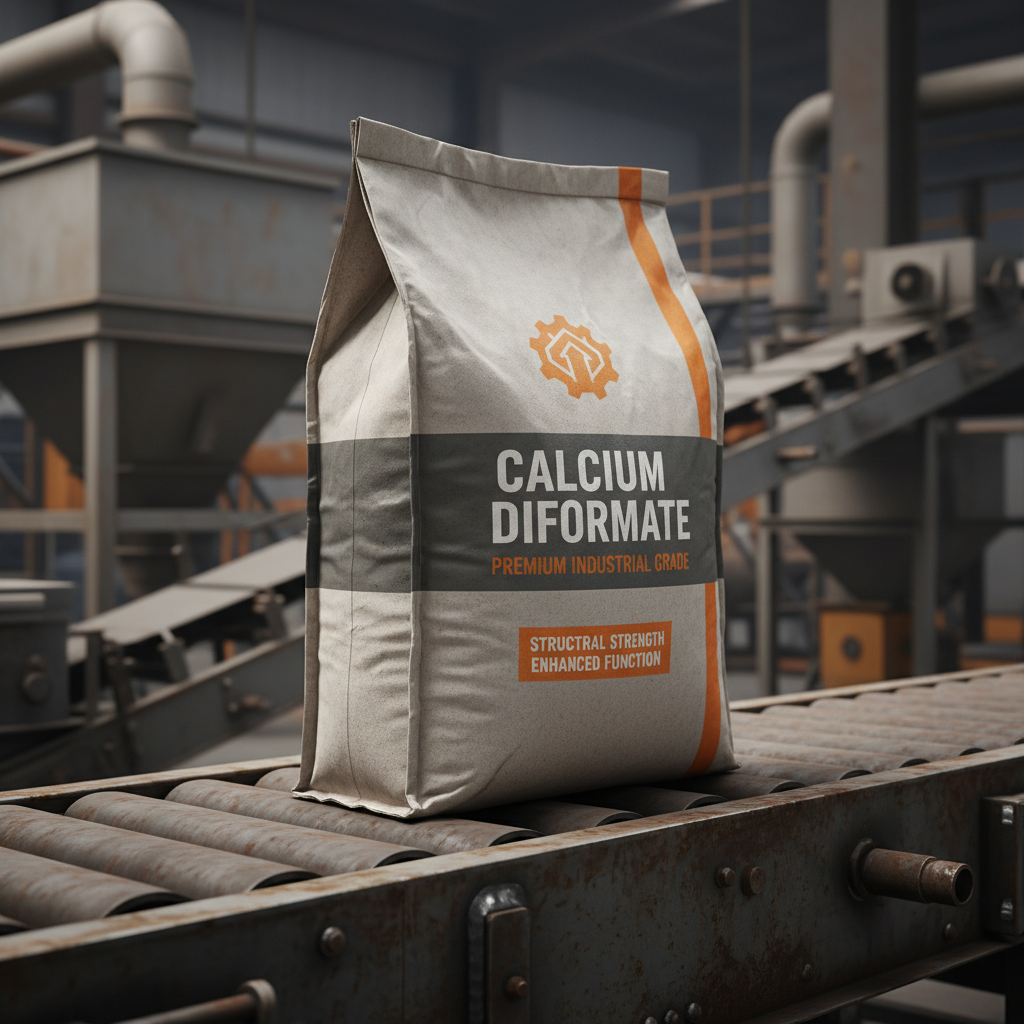
Calcium formate solubility is a crucial characteristic impacting its versatile applications across industries like construction, animal feed, and de-icing. Understanding the factors that influence how readily calcium formate dissolves in various solvents, primarily water, is essential for optimizing its effectiveness and ensuring consistent performance. This understanding drives innovation and allows for tailored solutions to meet specific operational requirements.
Globally, the demand for calcium formate is steadily increasing, driven by growing awareness of its eco-friendly properties and its effectiveness as a safer alternative to traditional chlorides in de-icing applications. This demand is particularly pronounced in regions with stringent environmental regulations and a focus on sustainable infrastructure. The variability in calcium formate solubility affects application efficiency and impacts the cost-effectiveness of its implementation.
Ultimately, a comprehensive grasp of calcium formate solubility empowers industries to leverage its benefits fully, leading to improved efficiency, reduced environmental impact, and enhanced product quality. This knowledge is vital for researchers, manufacturers, and end-users alike, fostering continuous improvement and innovation in related fields.
Introduction to Calcium Formate Solubility
Calcium formate solubility is not a static property; it's dynamically influenced by a range of conditions, including temperature, pH, and the presence of other solutes. Accurately predicting and controlling this solubility is vital in applications like concrete setting acceleration where the rate of dissolution dictates the reaction speed. calcium formate solubility impacts the overall efficiency and predictability of these processes.
Understanding the intricacies of calcium formate solubility allows for precise formulation adjustments, ensuring optimal performance in diverse applications. It’s a foundational element for innovation and quality control across numerous industries, and its continued investigation promises even more efficient and sustainable solutions in the future.
Global Relevance and Industry Context
The demand for alternatives to traditional de-icing salts, like sodium chloride, is increasing globally due to their corrosive effects on infrastructure and environmental damage. Calcium formate, with its comparatively lower corrosivity and higher biodegradability, is emerging as a viable alternative. However, its efficacy relies heavily on understanding and controlling its solubility in varying temperature and humidity conditions, especially in cold-weather climates.
According to the United Nations Environment Programme, sustainable infrastructure development is a critical goal for achieving global sustainability. Utilizing materials like calcium formate, while optimizing its performance through solubility control, aligns with these goals. The ISO standards are increasingly focusing on environmentally friendly de-icing agents, further driving the demand for solutions like calcium formate.
The challenge lies in balancing the cost-effectiveness of calcium formate with its solubility characteristics. Optimizing formulations to maximize the dissolution rate without excessive material usage is a key area of ongoing research and development. This is particularly important in regions where economic constraints limit the adoption of expensive alternatives.
Defining Calcium Formate Solubility
Calcium formate solubility refers to the maximum amount of calcium formate that can dissolve in a given solvent (typically water) at a specific temperature and pressure. It is typically expressed in grams per liter (g/L) or kilograms per cubic meter (kg/m³). The solubility is not a fixed value, but rather changes based on external parameters.
In modern industry, calcium formate solubility is paramount in applications like concrete acceleration, where the speed of dissolution dictates the setting time. Its utilization in animal feed relies on sufficient solubility for nutrient absorption. The humanitarian need for safe and effective de-icing agents, particularly in sensitive environments like airports and historical sites, also hinges on optimizing calcium formate's solubility.
Precisely defining calcium formate solubility involves considering its ionic nature and the interplay between calcium and formate ions in solution. Understanding the thermodynamics of this dissolution process is crucial for predicting its behavior under different conditions and tailoring applications accordingly.
Key Factors Affecting Solubility
Several key factors influence calcium formate solubility. Firstly, Temperature plays a significant role; generally, solubility increases with increasing temperature. Secondly, pH affects the ionization of formic acid, influencing calcium formate’s stability and dissolution. Thirdly, Solvent Composition, including the presence of other salts or organic compounds, can alter the solubility due to common ion effects or complex formation.
Another important factor is Pressure, although its effect is less pronounced in typical applications. Crystal Size and Morphology also matter; smaller particle sizes generally dissolve faster. Lastly, Agitation, or the degree of mixing, can significantly enhance the dissolution rate by promoting contact between the solid calcium formate and the solvent. calcium formate solubility needs to be tested in different conditions.
Calcium Formate Solubility Variation by Method
Real-World Applications of Calcium Formate
In the construction industry, calcium formate serves as a rapid-setting agent in concrete, particularly beneficial in cold weather conditions. Its solubility dictates the speed at which it interacts with cement, accelerating the hydration process. In animal feed, it’s used as a source of formic acid, contributing to gut health and improving feed efficiency, with solubility crucial for absorption.
A significant application lies in de-icing solutions, primarily for airport runways and bridges. Calcium formate’s lower corrosion potential compared to sodium chloride makes it ideal for these sensitive infrastructures. However, its effectiveness depends critically on maintaining adequate solubility at sub-zero temperatures to prevent ice formation.
Advantages and Long-Term Value
Employing calcium formate offers numerous advantages. Its lower corrosivity minimizes infrastructure damage, resulting in reduced maintenance costs and extended lifespan. Its higher biodegradability reduces environmental impact, aligning with sustainability goals. The efficient acceleration of concrete setting times translates to faster project completion and reduced construction timelines.
The long-term value lies in building more sustainable and resilient infrastructure, fostering environmental responsibility, and enhancing operational efficiency. Utilizing calcium formate not only addresses immediate challenges but also contributes to a more durable and environmentally conscious future.
Future Trends and Innovations
Research into nano-sized calcium formate particles aims to increase the surface area and enhance solubility, potentially leading to even faster setting times in concrete or improved nutrient absorption in animal feed. The development of novel formulations combining calcium formate with other additives is also underway, seeking to optimize performance and reduce costs.
Integration with digital monitoring systems could enable real-time adjustment of calcium formate dosage based on environmental conditions, maximizing efficiency and minimizing waste. Furthermore, advancements in green chemistry are exploring more sustainable production methods for calcium formate, reducing its carbon footprint.
The move toward circular economy principles will likely see increased efforts to recover and reuse calcium formate from waste streams, further minimizing environmental impact and maximizing resource utilization.
FAQS
Temperature is the most prominent factor, with solubility generally increasing with temperature. pH also plays a role due to its effect on formic acid ionization. The presence of other dissolved salts or organic matter can alter the solubility due to common ion effects or complexation. Maintaining optimal solubility is crucial for consistent performance in applications like de-icing and concrete acceleration.
Calcium formate generally exhibits lower solubility than sodium chloride at the same temperature. However, its advantage lies in its significantly lower corrosivity and environmental impact. While more calcium formate may be needed to achieve comparable de-icing performance, the reduced damage to infrastructure and ecosystems often outweighs this difference. Precise solubility data is application-specific and should be considered.
Yes, certain additives can enhance calcium formate solubility. For example, the addition of specific chelating agents or complexing agents can help to keep calcium ions in solution, increasing overall solubility. Research is ongoing to identify and optimize these additives for various applications. Careful consideration must be given to the compatibility of additives with the intended use.
Smaller particle sizes lead to a significantly faster dissolution rate due to the increased surface area exposed to the solvent. This is why nano-sized calcium formate particles are being investigated for applications requiring rapid reactions, such as concrete acceleration. However, handling and dispersion of nano-particles can present challenges.
Calcium formate solubility is typically measured by preparing a saturated solution at a specific temperature and then determining the concentration of dissolved calcium ions using techniques such as titration or ion chromatography. Careful control of temperature and pH is crucial for accurate measurements. These tests follow standardized methodologies for scientific rigor.
Yes, the type of water used can affect calcium formate solubility. Tap water often contains dissolved minerals and impurities that can influence the solubility compared to distilled water. The presence of other ions can either increase or decrease solubility depending on their interaction with calcium and formate ions. Using consistent water quality is essential for reproducible results.
Conclusion
In conclusion, understanding calcium formate solubility is paramount for optimizing its performance across a diverse range of applications. From enhancing concrete setting times to providing a more environmentally friendly de-icing solution, and acting as a crucial nutrient source in animal feed, its versatile properties are dependent on effectively managing its dissolution characteristics. The intricate interplay of temperature, pH, and solvent composition dictates its efficacy and should be considered in any implementation.
Looking ahead, ongoing research into nano-formulations and advanced additives promises even more efficient and sustainable utilization of calcium formate. Embracing innovation and prioritizing environmentally conscious solutions will unlock its full potential, contributing to a more durable, resilient, and ecologically responsible future. For more information on calcium formate and its applications, visit our website: www.yaguanhpmc.com.