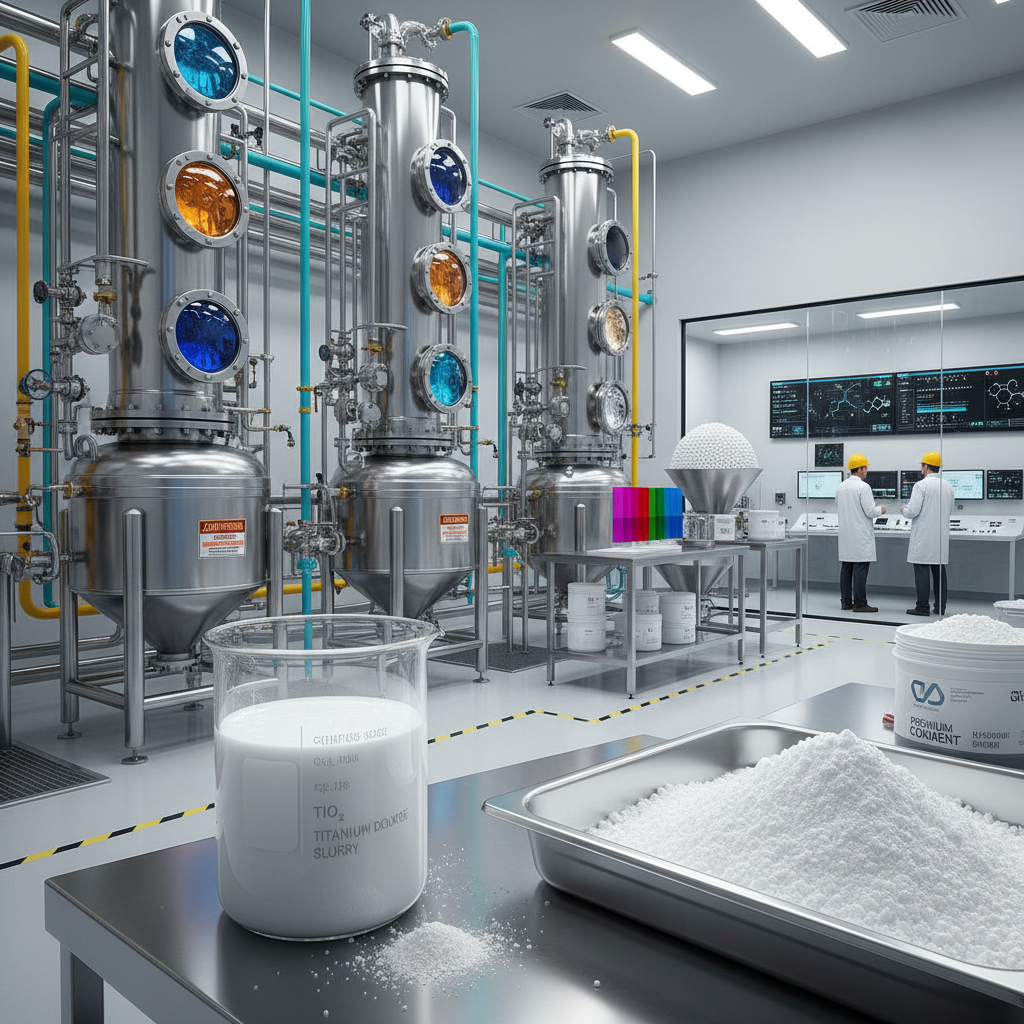
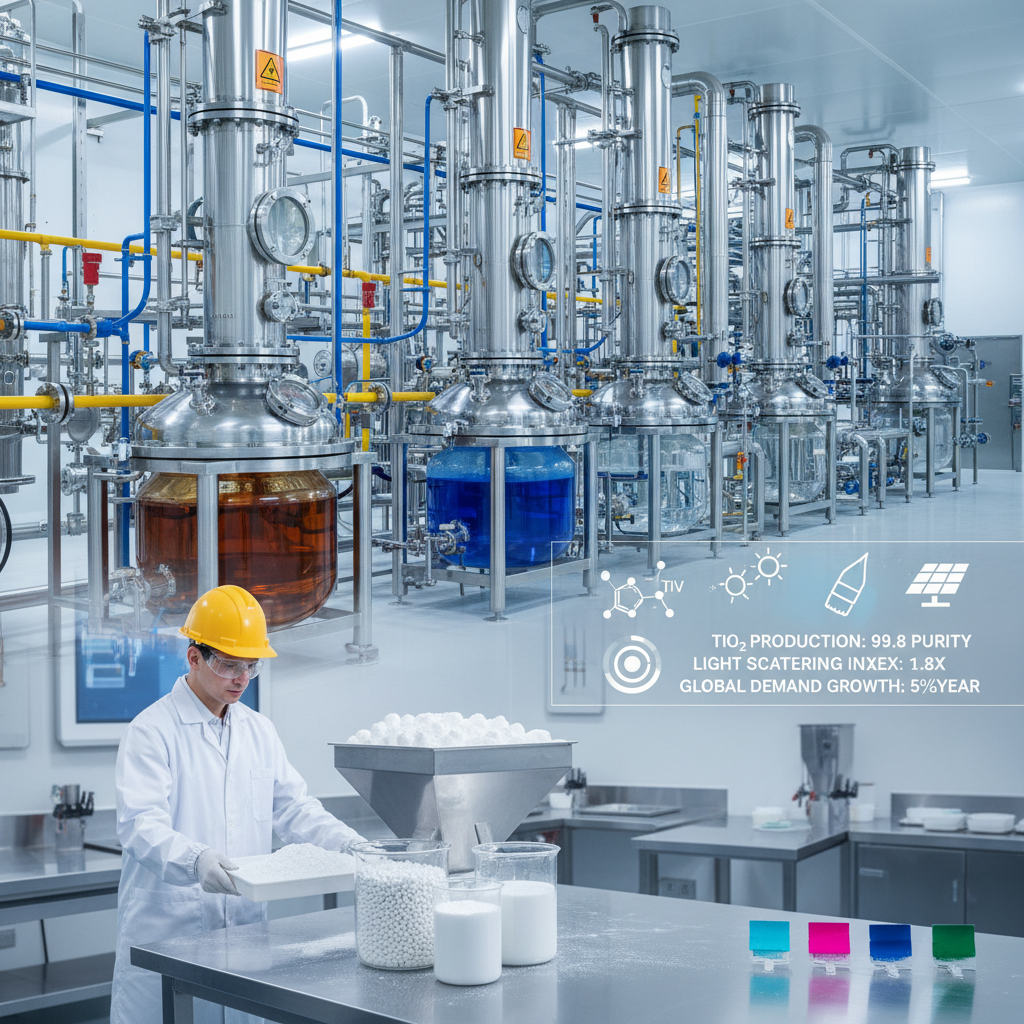
Titanium dioxide, commonly known as tio2 powder, is a versatile inorganic compound with widespread applications across numerous industries. Its remarkable properties, including high refractive index, opacity, and stability, make it an essential ingredient in paints, coatings, plastics, paper, inks, cosmetics, and even food products. The global demand for tio2 powder continues to grow, driven by increasing industrialization and a rising demand for high-performance materials. Understanding its production, properties, and applications is crucial for professionals across diverse sectors.
The tio2 powder market is significantly impacted by economic growth in emerging nations, particularly in Asia-Pacific. Factors such as infrastructure development, automotive production, and construction activities contribute substantially to the demand for coatings and plastics, consequently boosting tio2 powder consumption. However, environmental concerns regarding the production process and potential health effects are prompting research into more sustainable and safer alternatives.
The increasing focus on eco-friendly and sustainable materials is driving innovation in the tio2 powder industry. Manufacturers are exploring new production techniques that minimize environmental impact and improve product performance. Furthermore, research is underway to develop tio2 powder with enhanced properties, such as improved UV resistance and photocatalytic activity, expanding its application scope even further.
The Significance of tio2 Powder in Modern Industries
tio2 powder is a cornerstone material in a vast array of modern industries, from paints and plastics to pharmaceuticals and cosmetics. Its exceptional optical properties, including high refractive index and excellent light scattering, enable vibrant colors, opacity, and UV protection in numerous products. The demand for tio2 powder is directly linked to global economic growth and consumer spending, making it a key indicator of industrial health.
The versatility of tio2 powder stems from its ability to be produced in various crystal structures – anatase, rutile, and brookite – each offering unique properties suitable for specific applications. This adaptability allows manufacturers to tailor tio2 powder formulations to meet precise performance requirements, ensuring optimal product quality and functionality.
Defining tio2 Powder: Composition and Characteristics
tio2 powder, chemically represented as TiO₂, is an oxide of titanium. It exists naturally in several crystalline forms, but for industrial purposes, it’s primarily produced through the sulfate or chloride process. These processes yield highly purified tio2 powder with controlled particle size and morphology. The resulting powder is characterized by its brilliant whiteness, high chemical stability, and non-toxicity.
The key characteristics of tio2 powder include its refractive index, surface area, and crystal structure. These properties dictate its performance in various applications. For example, the rutile form, known for its high refractive index, is preferred in paints and coatings for superior opacity, while the anatase form, with its higher photocatalytic activity, is utilized in self-cleaning surfaces and environmental remediation.
The particle size distribution of tio2 powder is also critical. Finer particles generally lead to higher opacity and better dispersion, while larger particles can enhance durability and reduce cost. Manufacturers carefully control these parameters to optimize tio2 powder performance for specific end-use applications.
Key Properties Influencing tio2 Powder Applications
Several key properties define the performance of tio2 powder across different applications. Opacity, derived from its high refractive index, allows for excellent hiding power in paints, coatings, and plastics. Brightness is another critical factor, particularly in paper manufacturing and cosmetic formulations. A higher brightness value contributes to a cleaner, more vibrant appearance.
The UV absorption capability of tio2 powder is crucial for protecting materials from degradation caused by ultraviolet radiation. This property makes it invaluable in outdoor coatings, plastics, and sunscreens. Chemical inertness ensures stability and prevents unwanted reactions, extending the lifespan of products containing tio2 powder.
Furthermore, photocatalytic activity, primarily exhibited by the anatase form, enables tio2 powder to break down organic pollutants in air and water, making it a valuable component in environmental remediation technologies. Dispersion stability is also essential, ensuring uniform distribution within a matrix and preventing agglomeration, which can compromise performance.
The ability to control the crystal structure – anatase, rutile, or brookite – allows for tailoring the tio2 powder’s properties to specific applications. For instance, rutile is preferred for its superior weather resistance and durability in exterior coatings, while anatase is favored for its photocatalytic activity in self-cleaning materials.
Global Applications of tio2 Powder Across Industries
The applications of tio2 powder are remarkably diverse. In the paint and coatings industry, it's the primary white pigment, providing opacity, brightness, and durability. The plastics industry utilizes tio2 powder for coloration, UV protection, and improved mechanical properties. It’s commonly found in PVC, polyethylene, and polypropylene products.
The paper industry relies on tio2 powder to enhance brightness and opacity, resulting in higher-quality printing and writing papers. In cosmetics, tio2 powder serves as a pigment, UV filter, and opacifier in products like sunscreens, foundations, and lipsticks. The food industry employs tio2 powder as a whitening agent in confectionery, dairy products, and baked goods, although its use is increasingly scrutinized due to health concerns.
Emerging applications for tio2 powder include photocatalytic materials for air and water purification, solar cells for energy generation, and advanced ceramics for high-performance applications. Its versatility continues to drive innovation and expand its presence in new and exciting fields.
tio2 Powder Application Market Share by Industry
Advantages and Long-Term Value Proposition of tio2 Powder
The use of tio2 powder offers several significant advantages. Its exceptional opacity and brightness reduce the need for expensive pigments, resulting in cost savings. Its UV absorption properties extend the lifespan of materials, minimizing replacement costs and reducing waste. The inherent chemical stability of tio2 powder ensures long-term performance and reliability.
From a sustainability perspective, tio2 powder contributes to resource efficiency by providing long-lasting protection and reducing the frequency of repainting or replacement. Its use in photocatalytic applications offers a sustainable solution for air and water purification, contributing to environmental protection.
Emerging Trends and Innovations in tio2 Powder Technology
The tio2 powder industry is witnessing exciting developments focused on improving sustainability and enhancing performance. Researchers are exploring new production processes that minimize waste and reduce energy consumption. The development of surface-modified tio2 powder with enhanced dispersion and compatibility with various matrices is gaining momentum.
Another key trend is the development of nano-tio2 powder with improved UV absorption and photocatalytic activity. This allows for lower dosages and enhanced performance in applications such as sunscreens and self-cleaning coatings. Furthermore, the integration of tio2 powder with other nanomaterials is opening up new possibilities for creating advanced composite materials with tailored properties.
Challenges and Solutions in tio2 Powder Production and Utilization
Despite its numerous benefits, tio2 powder production and utilization face certain challenges. The traditional sulfate process generates significant waste streams, raising environmental concerns. The potential health effects of inhaled tio2 powder nanoparticles are also under scrutiny.
Solutions include transitioning to the more environmentally friendly chloride process, developing closed-loop production systems to minimize waste, and employing advanced coating technologies to prevent nanoparticle release. The development of bio-based tio2 powder alternatives is also being explored as a long-term sustainable solution.
Addressing these challenges requires collaborative efforts between manufacturers, researchers, and regulatory bodies to ensure responsible and sustainable tio2 powder production and utilization.
Summary of Key Challenges and Potential Solutions for tio2 Powder
| Challenge Area |
Specific Challenge |
Potential Solution |
Implementation Difficulty (1-10) |
| Environmental Impact |
Waste Generation from Sulfate Process |
Transition to Chloride Process |
7 |
| Health & Safety |
Nanoparticle Inhalation Risks |
Advanced Coating Technologies |
6 |
| Resource Depletion |
Titanium Ore Supply |
Recycling and Recovery Programs |
5 |
| Performance Limitations |
Dispersion Stability in Certain Matrices |
Surface Modification Techniques |
4 |
| Regulatory Compliance |
Evolving Regulations on Nanomaterials |
Proactive Risk Assessment & Management |
8 |
| Cost Competitiveness |
Competition from Alternative White Pigments |
Innovation in Production Efficiency |
6 |
FAQS
Anatase and rutile are two crystalline forms of tio2 powder. Anatase typically exhibits higher photocatalytic activity and is commonly used in applications requiring self-cleaning properties. Rutile, on the other hand, boasts superior opacity, durability, and weather resistance, making it ideal for paints, coatings, and plastics. The choice between the two depends on the specific application requirements.
tio2 powder is generally considered safe for most applications, but concerns have been raised regarding the potential health effects of inhaled nanoparticles. Regulatory bodies are continuously evaluating these risks. When handling tio2 powder, it’s essential to follow safety guidelines, including wearing appropriate respiratory protection and minimizing dust exposure.
The two primary methods for producing tio2 powder are the sulfate process and the chloride process. The sulfate process involves dissolving titanium-bearing ores in sulfuric acid, while the chloride process utilizes titanium tetrachloride gas. Both methods yield highly purified tio2 powder, but the chloride process is generally considered more environmentally friendly.
In the paint industry, tio2 powder serves as the primary white pigment, providing opacity, brightness, and durability to coatings. It also enhances UV resistance, protecting the underlying substrate from degradation. tio2 powder is used in a wide range of paints, including architectural coatings, automotive paints, and industrial coatings.
Recycling tio2 powder is challenging but gaining increasing attention. Recovering tio2 powder from waste streams, such as paint sludge and plastic waste, can reduce environmental impact and conserve resources. Ongoing research focuses on developing efficient and cost-effective recycling technologies.
Future trends in tio2 powder technology include the development of sustainable production processes, surface-modified powders with enhanced properties, and nano-tio2 powder for advanced applications. The integration of tio2 powder with other nanomaterials and the exploration of bio-based alternatives are also key areas of innovation.
Conclusion
In conclusion, tio2 powder is an indispensable material underpinning a vast range of industries, from paints and plastics to cosmetics and environmental remediation. Its unique properties – exceptional opacity, brightness, UV absorption, and photocatalytic activity – make it invaluable for enhancing product performance and sustainability. Understanding its characteristics, applications, and evolving technologies is critical for professionals seeking to leverage its full potential.
Looking ahead, the tio2 powder industry will continue to prioritize sustainability, innovation, and responsible practices. Addressing the challenges related to production waste, health & safety, and resource depletion will be essential for ensuring its long-term viability. By embracing new technologies and fostering collaboration, the tio2 powder industry can contribute to a more sustainable and technologically advanced future. For more information on tio2 powder and our related product offerings, including HPMC, PCE, PP Fiber, and RDP, please visit our website: tio2 powder.