Ultrafine titanium dioxide – sounds fancy, right? But honestly, after years on construction sites, knee-deep in dust and dealing with everything from concrete mixes to protective coatings, I can tell you it’s a workhorse. It’s not some lab experiment, it's a practical solution impacting everything from how long your paint lasts to the air quality around job sites. We're talking about a material that's quietly revolutionizing a lot of what we build and how we protect it. It’s about performance, longevity, and increasingly, about keeping crews safe and projects sustainable.
I’ve seen firsthand the problems it solves. Early generation TiO2 pigments often lacked the dispersion and UV stability needed for consistent results, leading to premature failures and costly rework. Now, with ultrafine particle sizes, we're achieving levels of performance previously unthinkable. This isn’t about hype; it’s about seeing real improvements in the field.
The demand for better materials, driven by stricter regulations and a push for more durable infrastructure, is what’s really putting ultrafine titanium dioxide in the spotlight. We need materials that can withstand harsh conditions, resist degradation, and contribute to a healthier environment. And that’s precisely what this stuff delivers. It's a crucial piece of the puzzle for modern construction and beyond.
Introduction to Ultrafine Titanium Dioxide
From protecting steel structures from corrosion to self-cleaning facades on buildings, ultrafine titanium dioxide is becoming indispensable. It’s not just an additive; it's often a critical component that dictates the lifespan and performance of entire systems. I’ve seen projects where using higher quality TiO2 directly translated to years added to the service life of a coating, saving significant money in the long run.
And it’s not limited to construction. The applications are expanding rapidly into areas like air purification, water treatment, and even medical devices. This versatility is a huge driver of innovation, and what makes it a really interesting material to watch.
The Global Relevance of TiO2
The global titanium dioxide market is massive – we’re talking billions of dollars annually. According to recent reports, the demand continues to climb, fueled by growth in construction, automotive, and coatings industries, particularly in developing economies. ISO standards for TiO2 are constantly evolving, demanding higher purity and performance characteristics. This growth isn't just about quantity; it’s about quality and sustainability.
We're facing a global infrastructure gap, and a pressing need for more durable, longer-lasting materials. That’s where ultrafine TiO2 comes in. It’s not a quick fix, but a core element in building more resilient and sustainable structures. We’re seeing stricter regulations regarding VOC emissions and environmental impact, driving the demand for TiO2 formulations that are both effective and eco-friendly.
The problem? Consistency. Sourcing reliable, high-quality ultrafine TiO2 from different suppliers can be a headache. Variations in particle size, surface treatment, and purity can drastically affect performance. It's a constant challenge to ensure we’re getting the material we need, every single time.
Defining Ultrafine Titanium Dioxide
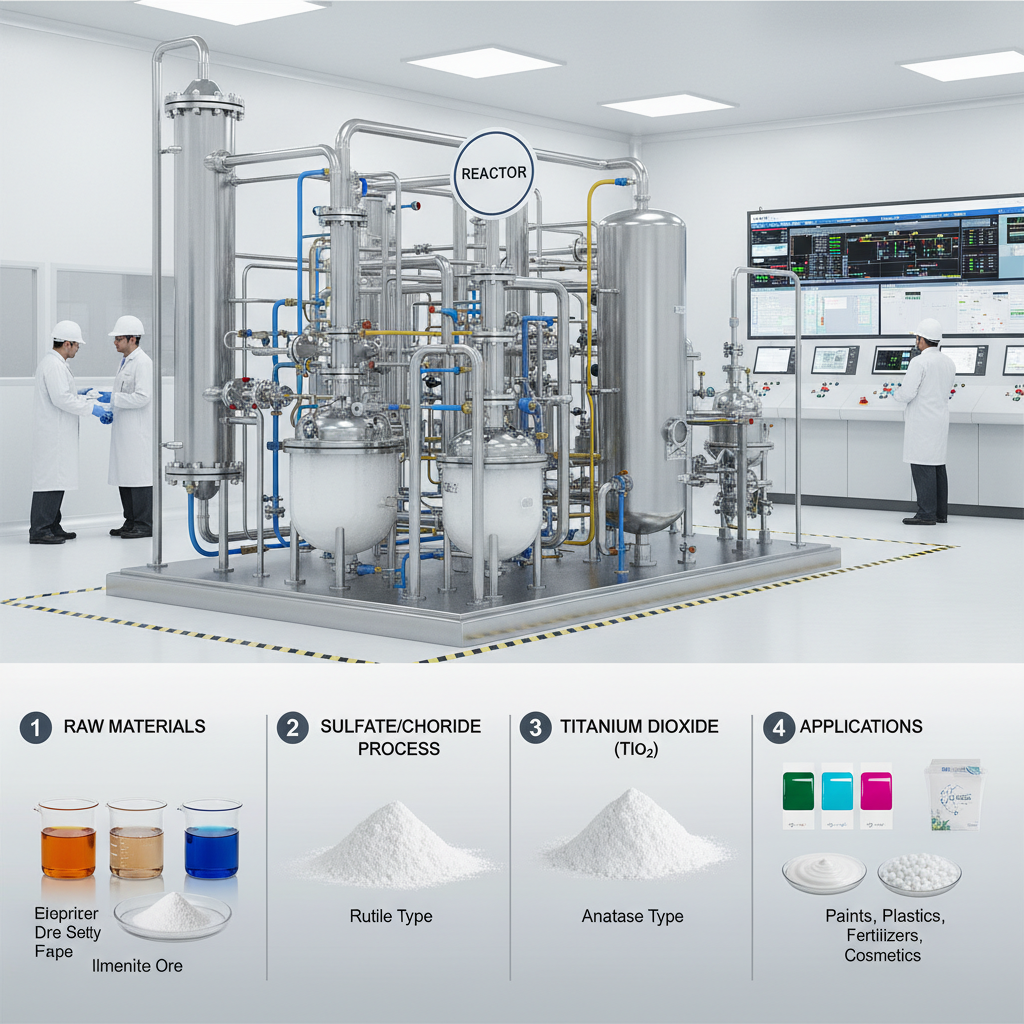
Ultrafine titanium dioxide simply refers to TiO2 particles with a significantly reduced particle size – typically less than 100 nanometers. This reduction in size dramatically increases its surface area, enhancing its photocatalytic activity, UV absorption, and scattering properties. It's a core ingredient in paints, coatings, plastics, and a whole host of other materials.
This isn’t about making things smaller for the sake of it. The smaller particle size leads to better dispersion within a matrix – meaning it integrates more effectively and doesn’t clump. This is huge for achieving consistent color, opacity, and performance. Better dispersion also leads to increased reactivity, which is vital for self-cleaning surfaces and air purification applications.
It connects directly to modern needs because it allows us to create materials that are both high-performing and environmentally responsible. As we push for more sustainable construction practices and stricter environmental regulations, materials like ultrafine TiO2 will only become more essential.
Key Characteristics of Ultrafine TiO2
Let’s break down what makes this stuff tick. First, UV Resistance: Ultrafine TiO2 is a phenomenal UV absorber. This is critical for protecting underlying materials from degradation caused by sunlight, extending their lifespan dramatically. Second, Photocatalytic Activity: This is where things get really interesting. When exposed to UV light, TiO2 acts as a catalyst, breaking down organic pollutants and dirt, leading to self-cleaning surfaces.
Third, Opacity & Brightness: The small particle size contributes to high refractive index, resulting in excellent opacity and brightness. That means vivid colors and effective light scattering. Fourth, Durability & Chemical Resistance: Properly formulated ultrafine TiO2 coatings are incredibly resistant to chemicals, abrasion, and weathering. Finally, Dispersion Stability: The ability to stay uniformly dispersed within a matrix is crucial for consistent performance and prevents settling or clumping.
Comparison of Ultrafine TiO2 Performance Metrics
Real-World Applications
I’ve seen it used in everything from self-cleaning airport terminals in Europe to protective coatings on bridges in Asia. In post-disaster relief operations, TiO2-infused fabrics can help purify air and water. We’re also seeing increased use in the automotive industry, particularly in self-cleaning windshields and exterior coatings.
The marine industry is another big one; TiO2 coatings help prevent biofouling on ship hulls, reducing drag and fuel consumption. And in remote industrial zones where air quality is a concern, TiO2-based air purification systems are proving incredibly valuable. It’s not a silver bullet, but it’s a powerful tool in the fight against pollution.
It’s popping up in textiles as well. A sportswear company is embedding ultrafine TiO2 in their fabrics for UV protection and odor control - a game changer for athletes. I’m also keeping a close eye on its potential in 3D printing materials, where it could enhance strength, durability, and even functionality.
Advantages and Long-Term Value
The tangible benefits are clear. Reduced maintenance costs due to self-cleaning surfaces, extended lifespan of materials due to UV protection, and improved air quality all translate into significant cost savings. But beyond the bottom line, there’s a real sustainability aspect. By extending the life of materials, we’re reducing waste and the need for frequent replacements.
There's also the safety factor. Using TiO2 in air purification systems creates healthier work environments, and protecting workers from harmful UV radiation is paramount. It builds trust with clients and contributes to a stronger, more responsible brand reputation. At the end of the day, people want to know that the materials we’re using are safe, effective, and environmentally sound.
Future Trends and Innovations
We're seeing a lot of R&D focused on improving the photocatalytic efficiency of TiO2, using doping and surface modifications. Integrating TiO2 with other nanomaterials, like graphene, is showing promising results in terms of enhanced conductivity and performance. There's also growing interest in developing TiO2-based sensors for environmental monitoring.
The push for green energy is driving innovation in TiO2-based solar cells and photocatalytic water splitting. Digital transformation and automation in manufacturing are also playing a role, allowing for more precise control over particle size and morphology. It’s a dynamic field, and it’s evolving rapidly.
I’m particularly excited about the potential of combining TiO2 with bio-based polymers to create truly sustainable and biodegradable materials. That’s where I see a real game-changer in the coming years.
Summary of Challenges and Solutions Associated with Ultrafine Titanium Dioxide
| Challenge |
Impact Area |
Proposed Solution |
Implementation Difficulty (1-10) |
| Dispersion Instability |
Performance & Consistency |
Surface Modification with Polymers |
6 |
| Cost of High-Purity TiO2 |
Economic Viability |
Optimized Synthesis Processes |
8 |
| Photocatalytic Efficiency |
Air/Water Purification |
Doping with Non-Metals |
7 |
| UV Absorption Limitations |
Material Degradation |
Combination with UV Stabilizers |
4 |
| Environmental Concerns (Nanoparticle Release) |
Sustainability & Safety |
Encapsulation & Binding Techniques |
5 |
| Batch-to-Batch Variation |
Quality Control |
Stricter Quality Assurance Protocols |
9 |
FAQS
Ultrafine TiO2 offers significantly improved UV absorption, photocatalytic activity, and dispersion compared to traditional pigments. This translates to enhanced durability, self-cleaning properties, and improved performance in coatings, plastics, and textiles. Because of the smaller particle size, you get better coverage and more consistent results, ultimately saving on material costs and reducing the need for frequent repainting or replacement.
The smaller the particle size, the greater the surface area. This increased surface area leads to higher reactivity and more efficient absorption of UV light. Ultrafine TiO2, with particle sizes under 100 nanometers, exhibits superior performance in photocatalytic applications and provides more effective UV protection. It also disperses more easily, leading to better color development and fewer defects in the final product.
While TiO2 is generally considered safe, the environmental impact of nanoparticles is still being studied. Proper handling and encapsulation are crucial to prevent nanoparticle release. Many manufacturers are developing surface treatments to enhance stability and reduce potential risks. Regulations are also evolving to ensure responsible use and disposal. Always refer to the manufacturer’s safety data sheet (SDS) for specific handling instructions.
Construction, automotive, textiles, and environmental remediation are seeing the biggest benefits. In construction, it’s used in self-cleaning facades and durable coatings. The automotive industry utilizes it for scratch-resistant paints and UV protection. Textiles benefit from its UV blocking and odor-reducing properties. And environmental applications leverage its photocatalytic activity for air and water purification.
Ultrafine TiO2 generally carries a higher price tag due to the more complex manufacturing processes involved in achieving the smaller particle size and controlling its properties. However, the increased performance and durability often offset the initial cost, leading to long-term savings through reduced maintenance and extended product lifecycles. You’re paying for a higher quality material with superior performance characteristics.
Look for reputable suppliers with consistent quality control measures. Ask for a technical data sheet (TDS) detailing particle size distribution, surface area, purity, and other key specifications. Request samples for testing and verify that the material meets your specific application requirements. Don't hesitate to ask about their manufacturing processes and quality assurance protocols.
Conclusion
Ultrafine titanium dioxide isn’t just a chemical compound; it’s a versatile material reshaping industries and paving the way for a more sustainable future. Its unique properties – UV resistance, photocatalytic activity, and enhanced durability – offer tangible benefits across a wide range of applications, from construction and automotive to environmental remediation and beyond. We’ve seen how it translates to cost savings, extended product lifecycles, and a healthier environment.
The future of ultrafine TiO2 is bright. Continued innovation in surface modifications, doping techniques, and integration with other materials will unlock even greater potential. By embracing this technology and investing in research and development, we can build a more resilient, efficient, and sustainable world. To learn more about how ultrafine titanium dioxide can benefit your projects, visit our website: www.yaguanhpmc.com.