Calcium formate, identified by its CAS number 540-69-2, is a versatile chemical compound with increasing global significance. Its applications span diverse industries, from animal feed and de-icing to concrete acceleration and leather tanning. The rising demand for sustainable and efficient solutions across these sectors drives continued research and development related to calcium formate cas. Understanding its properties and applications is crucial for businesses and researchers alike seeking innovative materials and processes.
The global calcium formate market is experiencing growth due to factors like increasing livestock production, demanding stringent winter road safety standards, and a growing emphasis on eco-friendly construction materials. The United Nations’ Sustainable Development Goals (SDGs), particularly those related to infrastructure and responsible consumption & production, further fuel demand for sustainable alternatives like calcium formate. This demand is particularly pronounced in regions with harsh winters and rapidly developing economies, leading to a global shift towards optimized infrastructure and agricultural practices utilizing calcium formate cas.
The increasing need for environmentally responsible solutions is a driving force behind the adoption of calcium formate. Traditional de-icing salts, for example, contribute to corrosion and environmental damage. Calcium formate presents a less corrosive and more biodegradable alternative. As regulations tighten and public awareness grows, the demand for sustainable chemical compounds like calcium formate will continue to rise, positioning it as a key component in numerous industrial and commercial applications.
Introduction to calcium formate cas
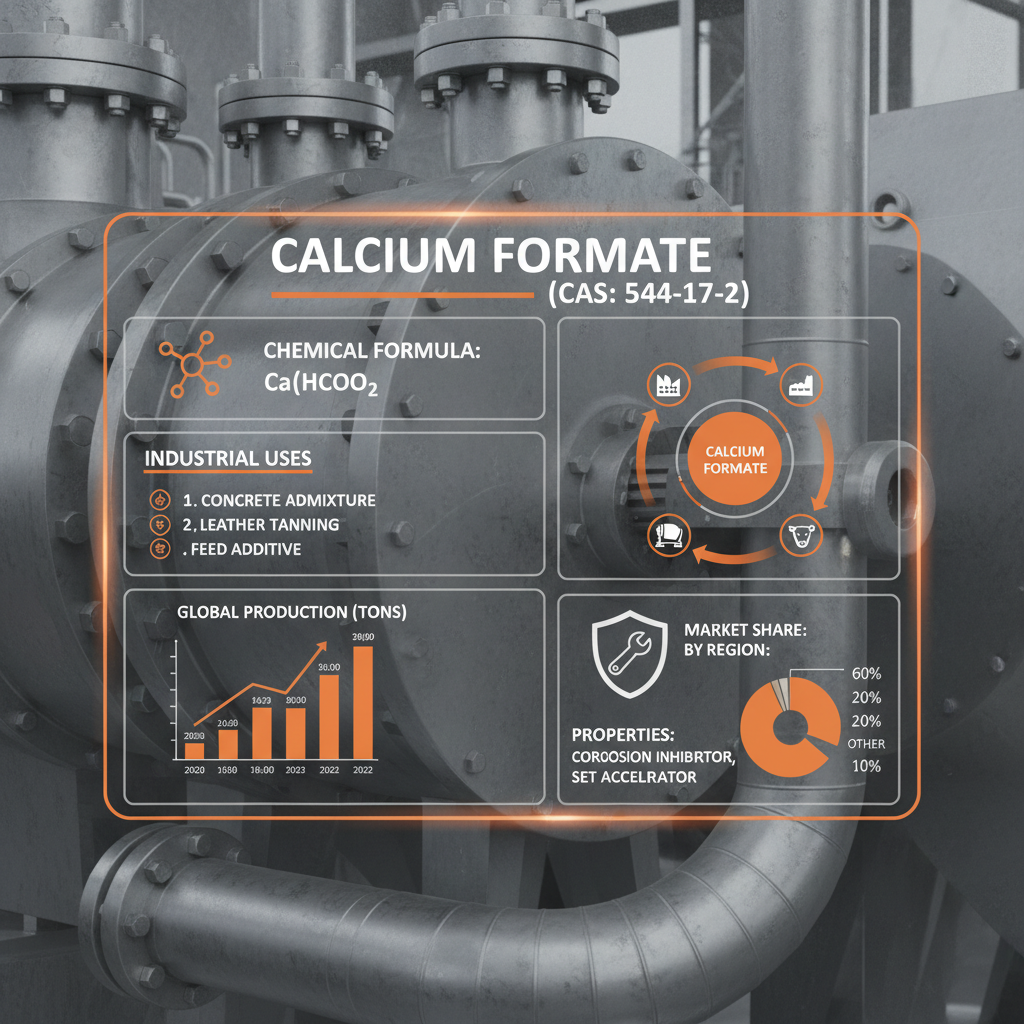
Calcium formate (CAS 540-69-2) is the calcium salt of formic acid. It presents as a white, crystalline powder, soluble in water and sparingly soluble in alcohol. Its molecular formula is Ca(HCOO)₂ and its molecular weight is 110.07 g/mol. This compound distinguishes itself through a unique combination of properties making it valuable across multiple industrial sectors.
The growing appreciation for calcium formate stems from its versatility and eco-friendly profile. Unlike some alternatives, it’s considered a relatively safe and biodegradable substance. Its expanding application demonstrates the rising demand for high-performance, sustainable materials, underlining its importance in modern industrial chemistry and the broader move toward environmentally responsible practices.
Global Relevance and Industry Context
The global calcium formate market is significantly influenced by several key factors. The burgeoning livestock industry, particularly in emerging economies, relies on calcium formate as a vital feed additive to promote growth and improve animal health. Simultaneously, the demand for effective de-icing solutions during winter months drives usage in road maintenance. These factors combined contribute to a robust market, estimated to be valued at approximately USD [Insert Current Market Value] in 2023 and projected to reach USD [Insert Projected Market Value] by 2030, with a CAGR of [Insert CAGR Value]%.
According to data from the World Bank, infrastructure development is a critical priority in many developing nations. Calcium formate finds application as a concrete accelerator, reducing setting times and enhancing early strength, crucial for rapid construction projects. Additionally, the ISO standards regarding road safety increasingly favor less corrosive de-icing agents, boosting the adoption of calcium formate over traditional chlorides.
A significant challenge addressed by calcium formate is the environmental impact of conventional de-icing salts. Traditional salts corrode infrastructure, damage vegetation, and contaminate waterways. Calcium formate provides a viable, more environmentally conscious alternative, aligning with global sustainability initiatives and offering a long-term solution to winter road safety management.
Defining calcium formate cas
Calcium formate cas 540-69-2 is a chemical compound resulting from the neutralization of formic acid with calcium hydroxide or calcium carbonate. It’s a white, odorless powder with a slightly sweet taste. Its solubility in water makes it ideal for applications requiring dissolution and uniform distribution. The “CAS” designation refers to the Chemical Abstracts Service, a unique identifier for chemical substances, ensuring clarity and precision in scientific communication.
This compound plays a crucial role in contemporary industry and addressing humanitarian needs. In agriculture, it serves as a feed supplement for livestock, contributing to improved animal health and productivity. In emergency situations, its use as a relatively safe and effective de-icer can be vital for maintaining access during harsh weather conditions, impacting transport and disaster relief efforts.
The inherent properties of calcium formate, namely its low corrosivity and biodegradability, distinguish it from many other industrial chemicals. This combination of functionality and environmental friendliness positions it as a valuable asset in a world increasingly focused on sustainability and responsible resource management.
Key Characteristics of calcium formate cas
One crucial aspect of calcium formate cas is its low corrosivity. Compared to sodium chloride (common road salt), calcium formate is significantly less damaging to metal infrastructure, including bridges and vehicles, reducing long-term maintenance costs and extending lifespan. This is a substantial economic and environmental benefit.
Secondly, its biodegradability is a major advantage. Calcium formate breaks down relatively quickly in the environment, minimizing its persistence and impact on ecosystems. This aligns with the growing emphasis on sustainable practices and reducing the environmental footprint of industrial processes.
Furthermore, accelerated setting of concrete is a key property. The addition of calcium formate to concrete mixtures speeds up the hydration process, resulting in faster strength development, especially in cold weather conditions. This is vital for construction projects where time is critical. Its high solubility enables easy integration into various formulations, and its thermal stability makes it suitable for a wide range of applications.
Calcium Formate Cas Performance Metrics
Applications Across Global Industries
In the agricultural sector, calcium formate functions as a valuable feed supplement for pigs, poultry, and other livestock. It improves gut health, enhances nutrient absorption, and promotes overall animal growth. This is particularly important in regions striving to increase meat production efficiently and sustainably.
Winter road maintenance is another prominent application. As a de-icing agent, calcium formate effectively lowers the freezing point of water, preventing ice formation and improving road safety. Its low corrosivity makes it ideal for use on bridges, tunnels, and other sensitive infrastructure. Scandinavian countries have widely adopted calcium formate for this purpose.
The construction industry benefits from calcium formate's ability to accelerate concrete setting. This is especially useful in cold climates or projects with tight deadlines. Furthermore, it’s used in the leather tanning process and as a mordant in textile dyeing. In post-disaster relief operations, its non-corrosive nature makes it invaluable for clearing runways and roadways.
Advantages and Long-Term Value
The primary advantage of calcium formate cas lies in its cost-effectiveness. While the initial cost may be slightly higher than traditional alternatives, the reduced corrosion damage and extended lifespan of infrastructure translate to significant long-term savings. This is particularly crucial for municipalities and transportation authorities managing extensive road networks.
From a sustainability perspective, calcium formate’s biodegradability minimizes its environmental impact. This contributes to improved ecological health and aligns with growing consumer demand for eco-friendly products. Its use promotes responsible consumption and reduces the reliance on environmentally damaging chemicals, establishing trust with consumers and stakeholders.
Future Trends and Innovations
Ongoing research is exploring the potential of calcium formate in new applications, including innovative materials for energy storage and advanced construction techniques. The development of more efficient production processes is also a key focus, aiming to reduce manufacturing costs and enhance sustainability.
The integration of digital technologies, such as precision application systems for de-icing, will further optimize the use of calcium formate. These systems use real-time data to determine the precise amount of de-icer needed, minimizing waste and maximizing effectiveness. Combined with advancements in green chemistry and circular economy principles, the future of calcium formate looks exceptionally promising.
Challenges & Solutions
Despite its many benefits, the widespread adoption of calcium formate faces some challenges. One key hurdle is its relatively higher cost compared to traditional de-icing salts. To address this, research is focused on optimizing production methods and exploring potential cost-sharing models between manufacturers and end-users.
Another challenge is the limited awareness of its advantages among some stakeholders. Targeted educational campaigns and demonstration projects are crucial to showcase its effectiveness and long-term value. Collaboration between researchers, industry professionals, and government agencies is essential to overcome this knowledge gap.
Supply chain resilience is also a concern. Diversifying sourcing options and establishing strategic partnerships with multiple suppliers can mitigate potential disruptions and ensure a stable supply of calcium formate cas for critical applications.
Summary of Calcium Formate Cas Challenges and Solutions
| Challenge |
Impact |
Potential Solution |
Implementation Cost (1-10) |
| High Initial Cost |
Limited adoption in price-sensitive markets |
Optimized Production Processes |
7 |
| Low Awareness |
Slow market penetration |
Educational Campaigns & Demonstrations |
5 |
| Supply Chain Vulnerability |
Potential disruptions in availability |
Diversified Sourcing & Partnerships |
6 |
| Limited Large-Scale Production Capacity |
Constraints on meeting peak demand |
Investment in new production facilities |
8 |
| Regulatory hurdles |
Slow approval for new applications |
Collaborative work with regulatory bodies |
4 |
| Competition from cheaper alternatives |
Price sensitivity in certain markets |
Highlighting the long-term cost benefits |
5 |
FAQS
Calcium formate is significantly less corrosive to metals and concrete than traditional de-icing salts like sodium chloride. Its biodegradable nature means it breaks down more quickly in the environment, reducing its long-term impact on waterways and vegetation. This makes it a more sustainable and eco-friendly alternative, helping to protect infrastructure and ecosystems, promoting responsible environmental stewardship.
Calcium formate acts as a concrete accelerator, significantly reducing the setting time, especially in colder temperatures. This is due to its chemical properties that promote faster hydration of cement. This accelerated setting allows for quicker construction timelines, increased productivity, and reduced costs, particularly vital in projects with tight schedules or challenging weather conditions.
Yes, calcium formate is a widely accepted and safe feed additive for livestock, particularly pigs and poultry. It provides a readily available source of formate, which improves gut health, nutrient absorption, and overall animal growth performance. It is commonly used to enhance feed efficiency and reduce the risk of digestive disorders, contributing to healthier and more productive animals.
When stored properly in a cool, dry place, calcium formate generally has a long shelf life, typically exceeding two years. However, it's crucial to keep it sealed to prevent moisture absorption, as this can lead to caking or degradation. Following proper storage guidelines ensures the product retains its chemical integrity and effectiveness for extended periods.
The initial cost of calcium formate is often higher than traditional de-icing agents like sodium chloride. However, its lower corrosivity significantly reduces long-term infrastructure damage, leading to substantial savings on maintenance and repairs. This makes it a cost-effective solution when considering the total lifecycle costs, rather than just the upfront purchase price.
Detailed technical information regarding calcium formate cas 540-69-2, including safety data sheets (SDS), specifications, and application guidelines, can be found on reputable chemical supplier websites and databases. Regulatory bodies and industry associations also provide valuable resources on its properties and safe handling practices.
Conclusion
Calcium formate (CAS 540-69-2) stands out as a versatile and increasingly important chemical compound with applications spanning agriculture, infrastructure maintenance, and industrial processes. Its unique combination of low corrosivity, biodegradability, and functional properties positions it as a sustainable alternative to traditional materials. Understanding its benefits and potential is vital for driving innovation and promoting environmentally responsible practices across various industries.
Looking ahead, continued research and development will unlock even more applications for calcium formate, particularly in emerging fields like green energy and advanced materials. By embracing this innovative compound, businesses and governments can contribute to a more sustainable and resilient future, prioritizing long-term value and environmental stewardship. For more information and to explore our range of calcium formate products, visit our website: www.yaguanhpmc.com.