Calcium methanoate, a fascinating chemical compound, is gaining prominence across diverse industries due to its unique properties and versatile applications. From acting as a crucial component in de-icing solutions to serving as a precursor in materials science, its significance is rapidly expanding. Understanding calcium methanoate’s potential benefits—including its relatively low toxicity and environmentally conscious production methods—is increasingly vital for researchers, manufacturers, and policymakers alike.
The global demand for efficient and sustainable solutions is driving innovation in areas where calcium methanoate excels. Its use in concrete acceleration, particularly in cold weather conditions, is proving crucial for large-scale infrastructure projects. Furthermore, its role in animal feed supplementation, promoting growth and health, presents a significant opportunity for the agricultural sector. Globally, regions experiencing harsh winters and rapid urbanization are experiencing the most immediate benefits from advances in calcium methanoate production and application.
As concerns over environmental impact grow, the focus on biodegradable and eco-friendly alternatives is intensifying. Calcium methanoate aligns perfectly with this trend, offering a viable and often superior solution to traditional, more harmful chemicals. This positions it as a key player in the ongoing shift toward a greener and more sustainable future.
Introduction to Calcium Methanoate
Calcium methanoate (Ca(HCOO)2) represents a significant advancement in several industrial processes. Its efficiency in applications such as concrete setting acceleration and its role in specialized chemical syntheses are increasingly recognized. The substance’s relatively benign environmental profile, compared to some alternatives, further enhances its appeal as a modern industrial chemical.
The ongoing research into calcium methanoate continues to unlock further applications and optimize its existing uses. The exploration of its potential in biodegradable plastics and as a sustainable de-icer demonstrates a commitment to environmentally responsible chemistry. This continual development solidifies calcium methanoate’s position as a cornerstone material in numerous sectors.
Defining Calcium Methanoate
Calcium methanoate is the calcium salt of formic acid. It exists as a white, crystalline powder, readily soluble in water. Chemically, it’s a versatile compound, capable of undergoing various reactions that make it valuable in numerous processes. Its molecular formula, Ca(HCOO)2, accurately represents its composition of calcium ions and methanoate (formate) anions.
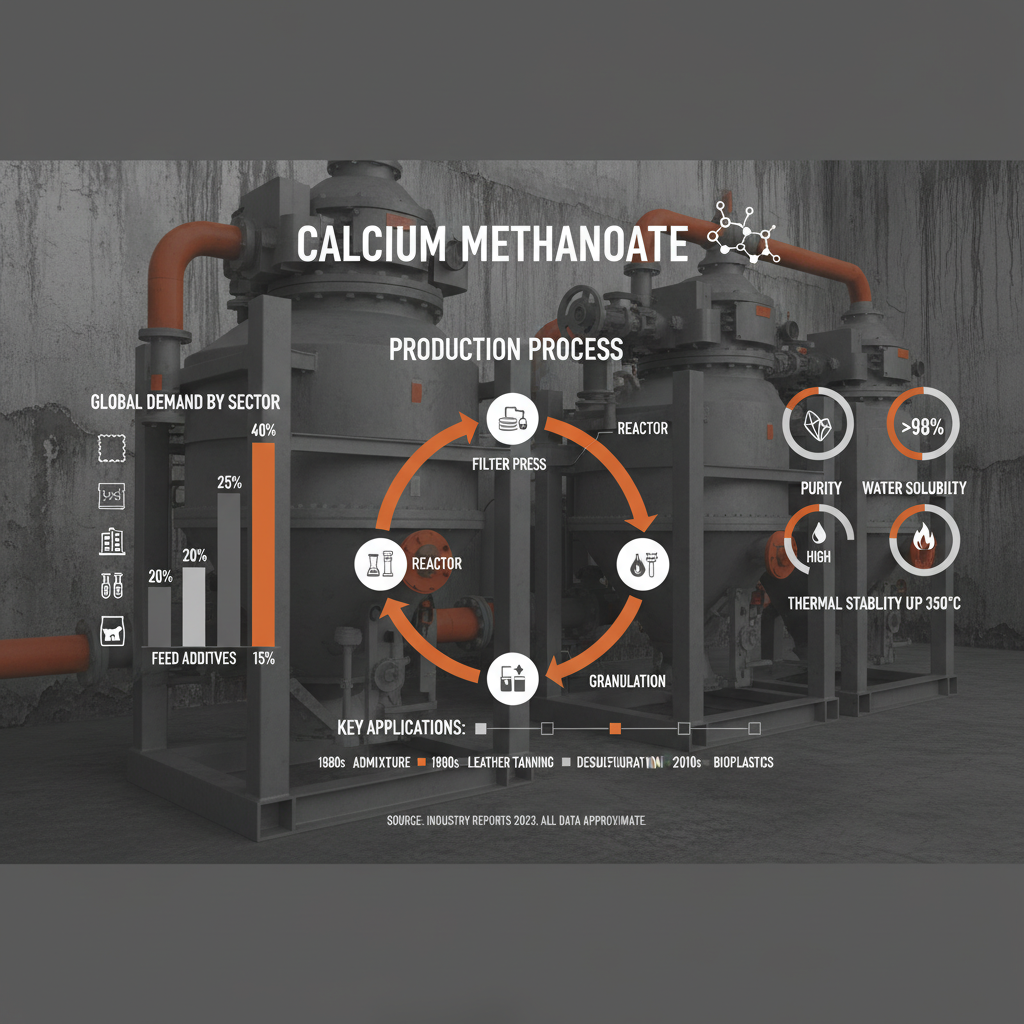
The production of calcium methanoate typically involves reacting calcium hydroxide with formic acid. The resulting solution is then evaporated to yield the crystalline product. Its connection to modern industry stems from its ability to act as a safe and effective alternative to harsher chemicals in applications ranging from construction to agriculture.
Crucially, calcium methanoate addresses several humanitarian needs. Its use in de-icing airport runways, for example, ensures safer travel during winter conditions. Its contribution to concrete acceleration enables faster construction of essential infrastructure in regions facing rapid population growth or disaster recovery situations.
Key Properties of Calcium Methanoate
One of the most significant properties of calcium methanoate is its accelerating effect on concrete setting. This is especially valuable in cold weather conditions where concrete setting can be dramatically slowed. Furthermore, it contributes to increased early strength development in concrete, improving structural integrity.
Calcium methanoate exhibits relatively low toxicity compared to many alternative concrete accelerators, such as calcium chloride. This makes it a more environmentally friendly and safer option for construction workers and the surrounding ecosystem. Its biodegradability also contributes to its overall sustainable profile.
Beyond its use in construction, calcium methanoate’s solubility in water allows for easy application in various processes. It readily dissolves, enabling effective dispersal and reaction within targeted systems. This property is essential in its application as a component in de-icing fluids, where rapid dissolution ensures efficient ice melt.
Applications Across Industries
The construction industry benefits enormously from calcium methanoate's ability to accelerate concrete setting times, particularly in winter. This reduces project timelines and associated costs. The chemical is also utilized to enhance the early strength of concrete, crucial for rapid load-bearing applications.
In the aviation industry, calcium methanoate is a key ingredient in environmentally responsible de-icing fluids for airport runways and aircraft. Its lower corrosion potential compared to traditional de-icers protects valuable airport infrastructure.
Calcium Methanoate Application Efficiency
Global Applications and Use Cases
In Canada and the northern United States, calcium methanoate is extensively used in airport de-icing operations to combat severe winter conditions, ensuring safe air travel. This is particularly critical at major international airports handling significant passenger traffic.
Throughout Europe, particularly in countries like Germany and the UK, calcium methanoate serves as a concrete accelerator in large-scale infrastructure projects, including the construction of bridges, tunnels, and high-speed rail networks. This accelerates construction timelines and reduces project costs.
Advantages and Long-Term Value
The primary advantage of calcium methanoate lies in its eco-friendly nature. It boasts a significantly lower environmental impact compared to traditional concrete accelerators and de-icing agents, minimizing ecological damage. Its biodegradability is a key factor in its sustainability.
From an economic perspective, calcium methanoate provides long-term value through reduced maintenance costs associated with infrastructure. Its lower corrosive properties extend the lifespan of concrete structures and airport runways, reducing the need for frequent repairs and replacements.
The use of calcium methanoate also enhances safety. Its less hazardous nature protects both workers and the public, reducing risks associated with handling and application. This contributes to a more responsible and ethical industrial practice.
Future Trends and Innovations
Research is underway to explore the potential of calcium methanoate as a component in biodegradable plastics, offering a sustainable alternative to conventional petroleum-based plastics. This application could revolutionize packaging and various other industries.
Innovations in production processes are focusing on reducing manufacturing costs and increasing efficiency. This will broaden the accessibility of calcium methanoate and encourage its adoption across a wider range of applications.
Policy changes promoting the use of environmentally friendly chemicals are expected to further drive the demand for calcium methanoate. Government regulations and incentives will play a crucial role in accelerating its widespread implementation.
Calcium Methanoate Production & Application Analysis
| Production Method |
Environmental Impact |
Cost Efficiency |
Application Suitability |
| Direct Reaction with Formic Acid |
Low - minimal waste products |
Medium - formic acid cost is significant |
Excellent for concrete acceleration |
| Formate Salt Conversion |
Medium - depending on salt source |
High - utilizes readily available salts |
Suitable for large-scale de-icing production |
| Electrochemical Synthesis |
Very Low - potential for closed-loop system |
Low - high initial investment |
Ideal for specialized chemical synthesis |
| Bio-Based Formic Acid Route |
Extremely Low - utilizes renewable resources |
Medium - formic acid production cost |
Aligns with circular economy principles |
| Waste Stream Recovery |
Negative - reduces industrial waste |
Very High - minimal material costs |
Promotes resource efficiency and sustainability |
| Optimized Reaction Conditions |
Low – minimized by-product formation |
Medium – Improved yield reduces costs |
Enhances overall production effectiveness. |
FAQS
Calcium methanoate offers several advantages over traditional rock salt (sodium chloride). Primarily, it's far less corrosive to metal and concrete, significantly extending the lifespan of infrastructure. It’s also effective at lower temperatures and exhibits a lower environmental impact, as it doesn't contribute to the same level of chloride contamination in waterways. While more expensive upfront, the reduced long-term maintenance and environmental remediation costs often make it a more cost-effective solution.
Calcium methanoate accelerates concrete setting by influencing the hydration process of cement. It acts as a catalyst, promoting the rapid formation of calcium silicate hydrate (C-S-H), the primary binding agent in concrete. This accelerated hydration leads to faster strength development, enabling quicker project completion and reduced formwork costs, especially in cold weather conditions where hydration slows down naturally.
Yes, calcium methanoate is approved for use as a feed additive in many regions, including the European Union. It provides a readily available source of formate, which can improve gut health and enhance growth performance in livestock, particularly in young animals. Strict regulations govern its usage levels to ensure animal safety and prevent any adverse effects.
When stored properly in a cool, dry environment, away from direct sunlight and moisture, calcium methanoate has a relatively long shelf life, typically exceeding two years. However, prolonged exposure to humidity can cause caking and reduce its effectiveness. It's crucial to store it in sealed containers to maintain its quality and reactivity.
Calcium methanoate boasts several key environmental benefits. It's readily biodegradable, minimizing its persistence in the environment. Its lower chloride content compared to rock salt reduces the risk of water contamination and harm to aquatic ecosystems. Furthermore, its production process can be optimized to reduce greenhouse gas emissions, contributing to a smaller carbon footprint.
For high-quality calcium methanoate, consider reputable chemical suppliers specializing in industrial-grade compounds. Yaguan HPC is a leading manufacturer and supplier offering a range of calcium methanoate products tailored to various applications. Ensure the supplier provides detailed product specifications, quality certifications, and reliable delivery services.
Conclusion
Calcium methanoate represents a significant advancement in numerous industrial and environmental applications. Its unique properties—including its concrete-accelerating capabilities, low toxicity, and biodegradability—position it as a crucial component in building sustainable infrastructure, ensuring safe transportation, and promoting responsible environmental practices. The ongoing research and development continue to expand its potential.
Looking ahead, calcium methanoate is poised to play an increasingly vital role in a world prioritizing sustainability and efficiency. Continued investment in innovative production methods, coupled with supportive policies, will unlock its full potential and drive widespread adoption across a diverse range of industries. To learn more about how calcium methanoate can benefit your operations, visit our website: www.yaguanhpmc.com