Understanding the PVA Process: A Comprehensive Guide
The Polyvinyl Alcohol (PVA) process is a cornerstone in various industries, from textiles and adhesives to packaging and medical applications. Its versatility stems from PVA's unique properties – water solubility, film-forming capabilities, and excellent emulsifying characteristics. This article will provide a detailed overview of the PVA process, covering its production, applications, and crucial factors to consider. Understanding this process is vital for professionals involved in material science, manufacturing, and product development. Let's delve into the intricacies of PVA production and its significance in modern industries.
The Core of the PVA Process: Polymerization
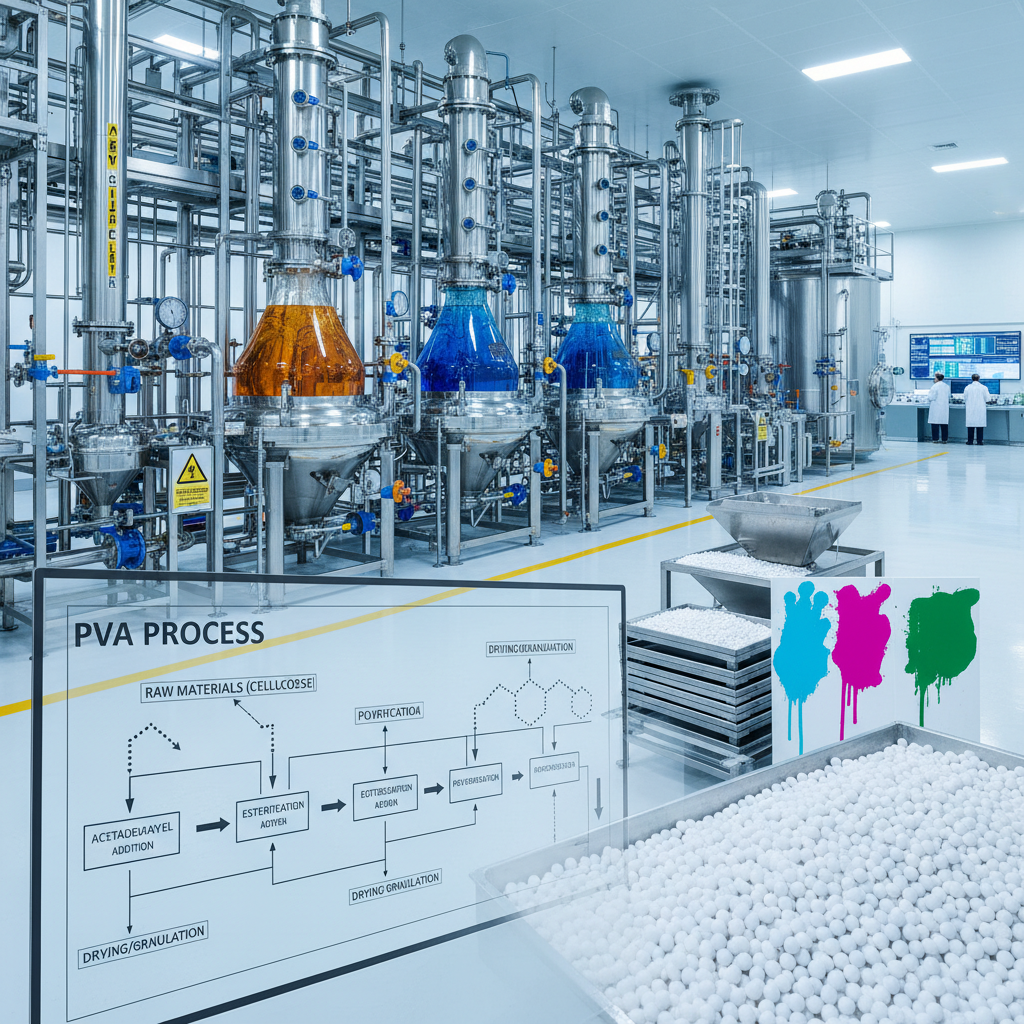
The PVA process fundamentally involves the polymerization of vinyl acetate monomer (VAM). This is typically achieved through emulsion polymerization, suspension polymerization, or bulk polymerization. Emulsion polymerization is the most common method due to its ability to produce high molecular weight PVA with good control over particle size. The process utilizes a water-based emulsion containing VAM, an emulsifier, a water-soluble initiator, and a chain transfer agent. The initiator triggers the polymerization reaction, forming long chains of polyvinyl acetate (PVAc). This PVAc is then hydrolyzed to produce PVA. Factors like temperature, pH, and initiator concentration significantly influence the polymerization rate and the final PVA properties. Yaguan HPMC offers high-quality PVA for diverse industrial needs.
Key Highlights: Emulsion polymerization is the dominant method for PVA production due to its control over molecular weight and particle size. Precise control of process parameters is critical for achieving desired PVA properties.
Hydrolysis: Transforming PVAc into PVA
Following polymerization, the PVAc undergoes hydrolysis – a chemical reaction with water to cleave the acetate groups, converting them into alcohol groups. This hydrolysis process is typically catalyzed by an acid or an alkali. The degree of hydrolysis is a critical parameter, determining the water solubility and other properties of the resulting PVA. Fully hydrolyzed PVA is highly water-soluble, while partially hydrolyzed PVA retains some water resistance. Controlling the hydrolysis conditions – temperature, pH, and reaction time – allows for the tailoring of PVA properties to specific application requirements. This is where a reliable PVA supplier, like Yaguan HPMC, plays a crucial role in providing consistent quality.
Hydrolysis Benefits:
• Converts PVAc to PVA, making it water-soluble.
• Degree of hydrolysis dictates water solubility and resistance.
• Precise control enables tailoring PVA properties for diverse applications.
PVA Grades and Their Applications
PVA is available in various grades, categorized by molecular weight and degree of hydrolysis. Different grades are suited for specific applications. For instance, high molecular weight, fully hydrolyzed PVA is commonly used in textile sizing and as a thickener in adhesives. Partially hydrolyzed PVA finds applications in paper coatings, emulsion stabilization, and as a protective colloid. Low molecular weight PVA is often employed in cement modifiers and as a dispersant. Yaguan HPMC provides a comprehensive range of PVA grades to meet diverse industrial demands.
The PVA Process: Key Considerations & Quality Control
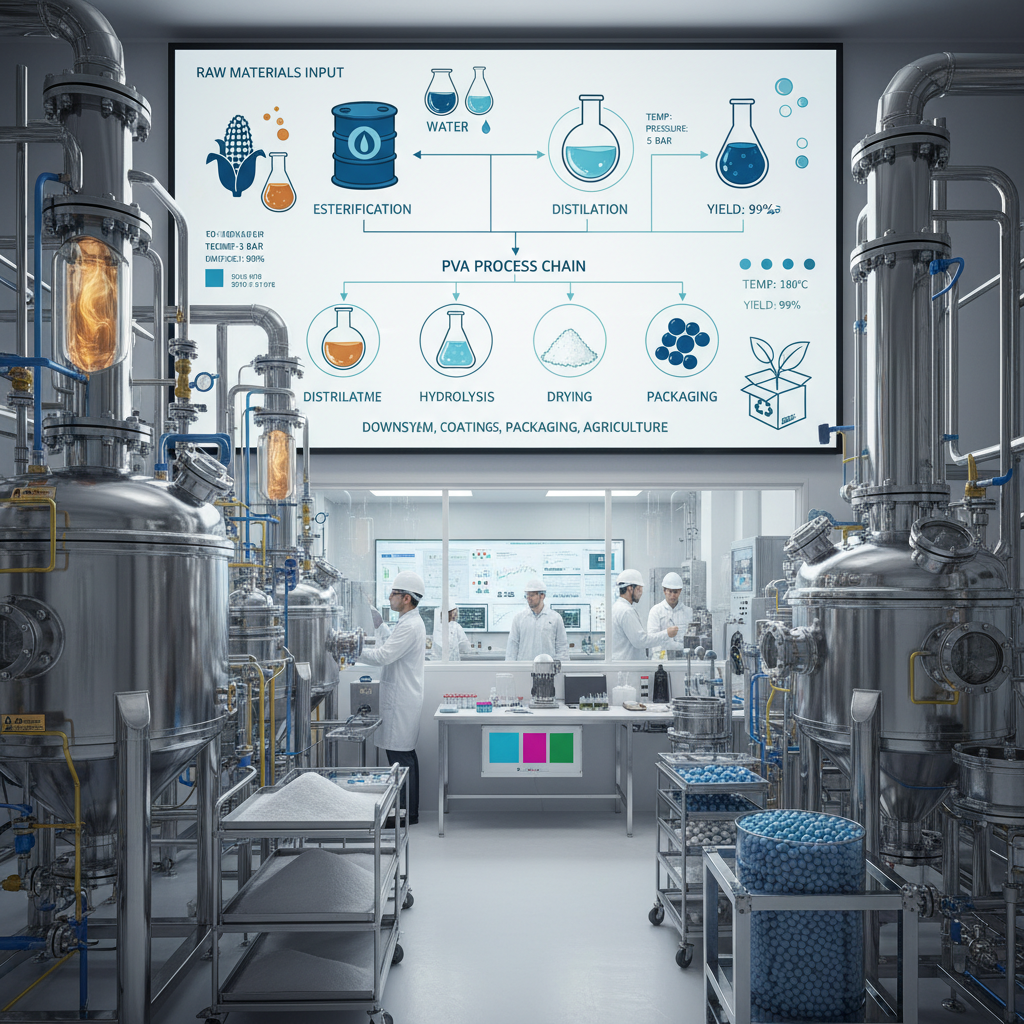
Maintaining consistent quality throughout the PVA process is paramount. Key parameters like molecular weight distribution, degree of hydrolysis, and residual VAM content must be carefully monitored and controlled. Advanced analytical techniques, such as viscometry, gas chromatography, and Karl Fischer titration, are used for quality assessment. Selecting a reputable supplier, such as Yaguan HPMC, which implements rigorous quality control measures, ensures reliable performance and consistency in your applications. Optimizing the process and choosing the right PVA grade for your specific application can lead to significant improvements in product quality and efficiency.
Conclusion: The Versatility of PVA
The PVA process remains a vital component in countless industries. Its ability to produce a versatile polymer with tailored properties ensures its continued relevance in developing innovative materials and applications. Understanding the nuances of the process, from polymerization to hydrolysis and quality control, is essential for maximizing the potential of PVA.
Frequently Asked Questions (FAQs)
What are the environmental considerations in the PVA process?
The PVA process, while versatile, involves considerations for environmental sustainability. The primary concerns revolve around the handling and disposal of vinyl acetate monomer (VAM), which is a volatile organic compound (VOC). Modern PVA production facilities employ closed-loop systems and VOC recovery technologies to minimize emissions. Furthermore, PVA itself is biodegradable under certain conditions, offering an advantage over some other synthetic polymers. Responsible waste management and adherence to environmental regulations are critical for minimizing the environmental impact of the PVA process. Selecting a supplier committed to sustainable practices, like Yaguan HPMC, is also vital.
How does the molecular weight of PVA affect its properties?
The molecular weight of PVA significantly impacts its physical and chemical properties. Higher molecular weight PVA generally exhibits increased viscosity, improved film strength, and enhanced adhesive properties. It also tends to be less soluble in water. Conversely, lower molecular weight PVA has lower viscosity, faster dissolution rates, and is often used as a dispersant or modifier. The optimal molecular weight for a specific application depends on the desired performance characteristics.
What are some emerging applications of PVA?
Emerging applications of PVA are continually expanding. Researchers are exploring its use in biodegradable packaging films, biomedical materials (such as drug delivery systems and wound dressings), and as a component in 3D printing materials. Its biocompatibility and film-forming properties make it an ideal candidate for various biomedical applications. The development of PVA-based hydrogels for tissue engineering is also a promising area of research. Furthermore, PVA is being investigated as an electrolyte in advanced battery technologies.
Where can I source high-quality PVA for my application?
Sourcing high-quality PVA is critical for ensuring optimal performance in your applications. Yaguan HPMC is a leading manufacturer and supplier of PVA, offering a wide range of grades with consistent quality and reliability. Their dedicated team provides technical support and can assist you in selecting the most suitable PVA grade for your specific needs. They are committed to meeting the stringent requirements of various industries.