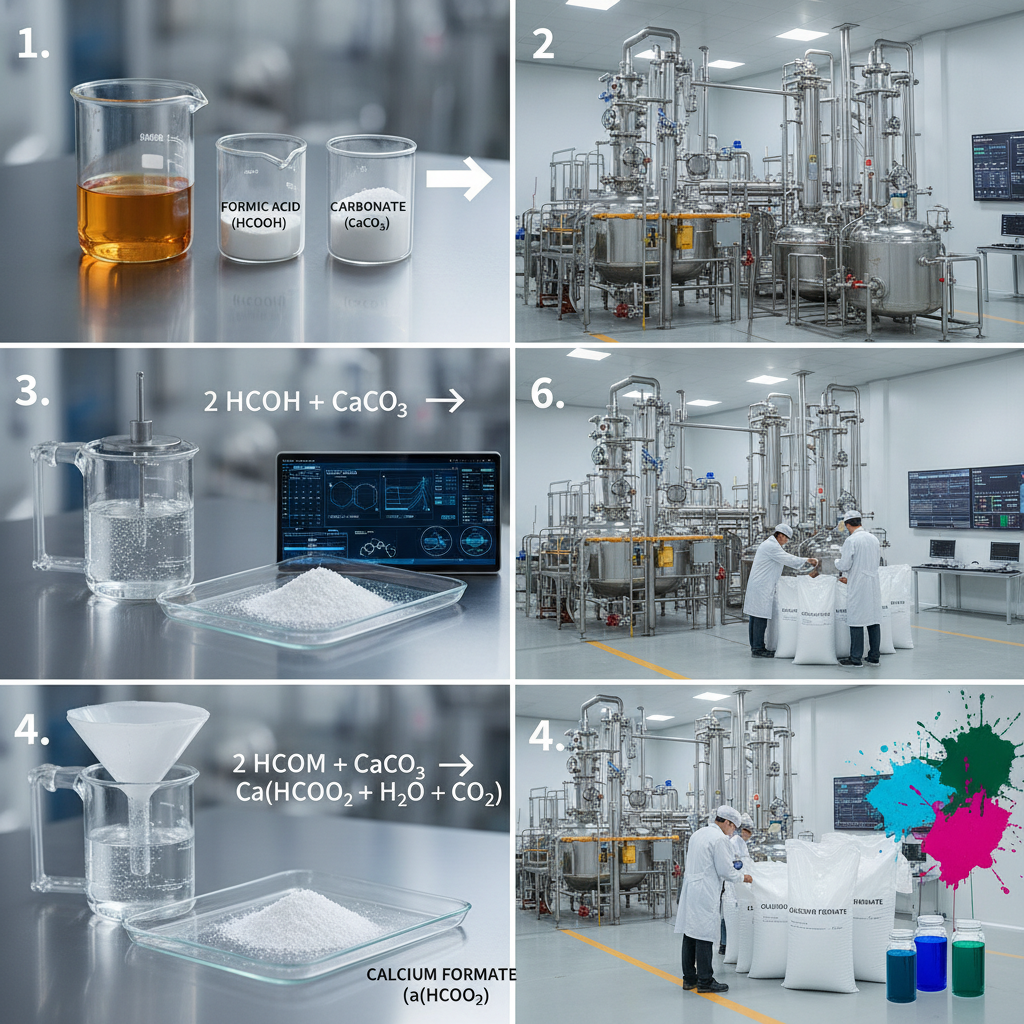
Calcium formate, with the chemical formula of calcium formate Ca(HCOO)₂, is a salt formed by the reaction of calcium hydroxide and formic acid. Its versatility stems from its unique properties, making it a crucial component in diverse industrial applications, ranging from concrete acceleration to animal feed additives. Understanding its chemical structure and behavior is paramount for optimizing these applications and exploring new possibilities.
The global relevance of calcium formate is growing, driven by the demand for sustainable and efficient materials. The construction industry, a major consumer, benefits from its ability to accelerate concrete setting times, particularly in cold weather conditions, reducing project timelines and costs. With a projected growth in infrastructure development worldwide, as highlighted by UN reports on urbanization, the demand for effective concrete admixtures like calcium formate is expected to surge.
Furthermore, its non-toxic nature and biodegradability align with increasing environmental consciousness. This makes it a preferred alternative to traditional, more harmful additives in various applications. The World Bank’s emphasis on sustainable infrastructure further underscores the importance of materials like calcium formate in fostering responsible development globally.
Introduction to chemical formula of calcium formate
The chemical formula of calcium formate, Ca(HCOO)₂, represents a pivotal compound in several industrial sectors. Its effectiveness as a concrete accelerator and de-icing agent has established it as a valuable material. Understanding its synthesis, properties, and application is essential for professionals involved in construction, environmental engineering, and materials science.
Calcium formate’s role extends beyond purely industrial contexts; it also finds application in animal nutrition as a feed supplement, contributing to animal health and productivity. This dual-use characteristic further broadens its significance in the global market, demanding a comprehensive understanding of its multifaceted nature.
Defining Calcium Formate
Calcium formate is a calcium salt of formic acid. Its molecular weight is 110.07 g/mol and it exists as a white, crystalline powder. The chemical formula of calcium formate – Ca(HCOO)₂ – highlights its composition: one calcium ion (Ca²⁺) bonded to two formate anions (HCOO⁻). This simple yet elegant structure dictates its unique properties.
Unlike other calcium salts, calcium formate exhibits a relatively high solubility in water, contributing to its effectiveness in liquid applications such as concrete admixtures and de-icing solutions. This solubility is crucial for ensuring even distribution and efficient reaction within the target material.
Its production typically involves neutralizing formic acid with calcium hydroxide (lime). The resulting solution is then concentrated and crystallized to obtain the final product. The purity and crystalline structure of calcium formate are critical quality parameters that influence its performance in various applications.
Core Properties of Calcium Formate
One of the key properties of calcium formate is its accelerating effect on concrete setting. This is due to the formate ions (HCOO⁻) which facilitate the hydration of cement particles, leading to faster hardening and increased early strength development. This property is particularly valuable in cold weather construction where setting times are naturally prolonged.
Calcium formate is also recognized for its low toxicity and biodegradability. This makes it a more environmentally friendly alternative to traditional concrete admixtures containing chlorides, which can contribute to corrosion of steel reinforcement. The reduced environmental impact positions it favorably in sustainable construction practices.
Furthermore, calcium formate exhibits good thermal stability and is non-corrosive to metals under normal conditions. It also possesses a low dust generation potential, enhancing workplace safety during handling and application. These factors contribute to its ease of use and broad applicability.
Applications Across Industries
The construction industry remains the largest consumer of calcium formate, utilizing it as a concrete accelerator and setting regulator. It’s particularly effective in precast concrete, repair mortars, and shotcrete applications, accelerating project timelines and reducing costs.
Beyond construction, calcium formate finds use as a de-icing agent for runways and roads, offering a less corrosive alternative to traditional salt. Its biodegradable nature minimizes environmental damage, making it suitable for environmentally sensitive areas.
Performance of Calcium Formate in Different Application Methods
Advantages and Value Proposition
The use of calcium formate delivers significant cost savings through accelerated construction timelines and reduced material waste. Its ability to enhance concrete strength also contributes to longer-lasting infrastructure, minimizing long-term maintenance costs.
From a sustainability standpoint, calcium formate's biodegradability and low toxicity offer a significant advantage over environmentally harmful alternatives. This aligns with growing corporate social responsibility initiatives and stricter environmental regulations.
Future Trends in Calcium Formate
Research and development efforts are focusing on optimizing calcium formate production processes to reduce costs and enhance purity. Exploring synergistic effects with other concrete admixtures is another active area of investigation.
The increasing adoption of green building practices is expected to drive further demand for sustainable materials like calcium formate. Digitalization and automation in construction will also require materials with predictable and consistent performance characteristics, further favoring calcium formate’s use.
Nanotechnology is also being explored to enhance the performance of calcium formate, potentially leading to even more efficient and sustainable construction materials.
Challenges and Mitigation Strategies
One challenge associated with calcium formate is its relatively higher cost compared to some traditional concrete admixtures. However, this cost can be offset by the benefits of accelerated construction and reduced lifecycle costs.
Ensuring consistent product quality and purity is also crucial. Implementing stringent quality control measures throughout the production process can mitigate this challenge. Collaboration with reputable suppliers is essential.
Addressing concerns about long-term performance and durability requires ongoing research and field testing. Developing standardized testing methods and performance criteria will further build confidence in the reliability of calcium formate.
Summary of Challenges and Mitigation Strategies for Calcium Formate Application
| Challenge |
Impact on chemical formula of calcium formate Performance |
Mitigation Strategy |
Cost of Implementation |
| High Initial Cost |
Limits widespread adoption |
Focus on lifecycle cost benefits & optimized usage |
Low |
| Quality Control Variability |
Inconsistent performance in concrete setting |
Implement strict quality assurance protocols |
Medium |
| Limited Long-Term Data |
Uncertainty regarding durability over decades |
Conduct comprehensive long-term field studies |
High |
| Supply Chain Disruptions |
Potential for shortages and price fluctuations |
Diversify sourcing and build strategic partnerships |
Medium |
| Lack of Awareness |
Slow adoption due to unfamiliarity with benefits |
Invest in education and promotional campaigns |
Low-Medium |
| Compatibility Issues |
Potential for adverse reactions with other admixtures |
Thorough testing for compatibility with common concrete mixtures |
Medium |
FAQS
The primary benefit is significantly reduced concrete setting times, particularly in colder temperatures. This acceleration leads to faster project completion, lower labor costs, and improved early strength development. The chemical formula of calcium formate facilitates the hydration process, accelerating hardening without compromising the final concrete strength or durability.
Calcium chloride is known to promote corrosion of steel reinforcement within concrete, leading to structural damage over time. Calcium formate, however, is non-corrosive, making it a far safer and more sustainable option. This difference is critical for long-term infrastructure integrity and reducing lifecycle maintenance costs. The chemical formula of calcium formate doesn't introduce chlorides, eliminating this risk.
Yes, calcium formate is considered environmentally friendly due to its biodegradability and low toxicity. It does not contribute to harmful environmental pollution like some other concrete admixtures. This makes it a preferred choice for green building projects and environmentally sensitive applications, aligning with sustainable construction practices. Its chemical formula of calcium formate supports reduced environmental impact.
The typical dosage rate varies depending on the specific concrete mix design and desired setting time. However, a common range is between 2% to 5% by weight of cement. It's crucial to follow the manufacturer's recommendations and conduct trial mixes to optimize the dosage for each application. Proper dosage ensures the chemical formula of calcium formate performs optimally.
Calcium formate is generally compatible with most common types of concrete, including Portland cement, blended cements, and precast concrete mixes. However, it's important to test compatibility with specific admixtures or additives used in the concrete mix to avoid any adverse reactions. The chemical formula of calcium formate's reactivity should be considered in mix design.
Calcium formate should be stored in a cool, dry, and well-ventilated area, away from direct sunlight and moisture. It is hygroscopic, meaning it can absorb moisture from the air, which may cause clumping. Proper storage helps maintain product quality and ensures its effectiveness when used. Protecting the chemical formula of calcium formate from humidity is critical.
Conclusion
In conclusion, the chemical formula of calcium formate, Ca(HCOO)₂, offers a compelling combination of performance, sustainability, and cost-effectiveness across a range of applications, most notably in the construction industry. Its ability to accelerate concrete setting, reduce corrosion risks, and minimize environmental impact positions it as a vital material for modern infrastructure development. Understanding its properties and applications is crucial for professionals seeking innovative and responsible building solutions.
Looking ahead, continued research and development will further refine calcium formate’s applications and address existing challenges. Embracing this versatile compound is not only a step towards more efficient and durable infrastructure but also a commitment to a more sustainable and environmentally conscious future. Visit our website at www.yaguanhpmc.com to learn more about our calcium formate products and solutions.