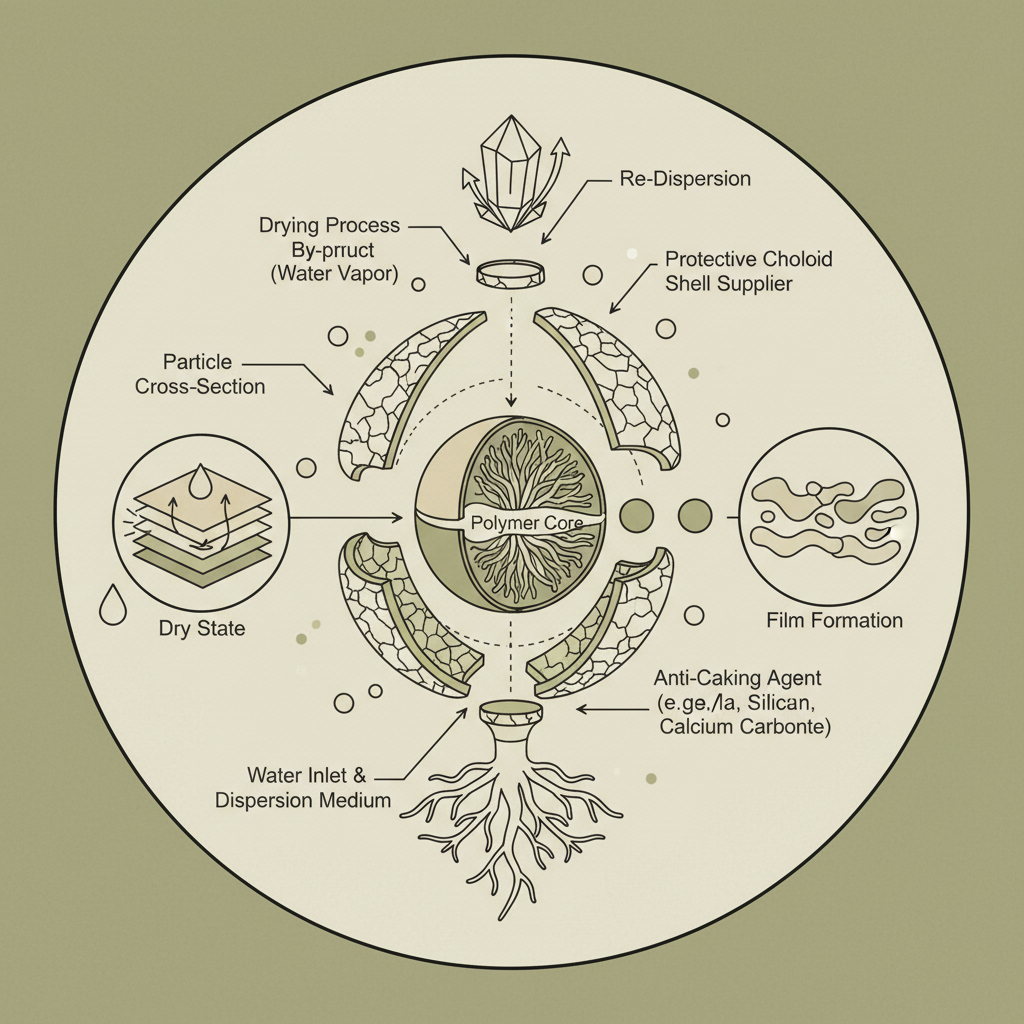

rdp powder china, also known as Redispersible Polymer Powder, is a specialized additive essential for modern dry-mix mortar systems. It is produced through the spray-drying of special water-based emulsions, allowing the polymer to be converted into a free-flowing powder that redisperses instantly upon contact with water.
In the demanding world of chemical raw materials and synthetic material manufacturing, ensuring the bond strength and flexibility of cementitious products is a constant challenge. Poor adhesion and shrinkage cracks often lead to structural failures in construction, creating a need for high-performance polymer additives that enhance concrete durability.
This technical analysis explores how rdp powder china optimizes the mechanical properties of mortars, provides a detailed breakdown of technical specifications, and offers procurement guidance for engineers and purchasing managers seeking to improve construction quality and efficiency.

1Understanding the Fundamentals of RDP Powder

rdp powder china serves as a critical bridge between organic polymers and inorganic cementitious materials. When added to a dry mix, it remains inert until water is introduced, at which point the powder redisperses into a polymer film. This film fills the pores of the mortar matrix, significantly increasing the tensile and flexural strength of the hardened material.
The chemical composition typically involves vinyl acetate-ethylene (VAE) copolymers, which are preferred for their balance of flexibility and compatibility with Portland cement. This makes rdp powder china an indispensable component for tile adhesives, wall putties, and external thermal insulation composite systems (ETICS).
From a manufacturing perspective, the quality of the powder depends heavily on the spray-drying process. Consistent particle size distribution is required to prevent clumping and ensure that the product blends seamlessly with other dry ingredients like HPMC or PCE.
2Core Technical Advantages and Material Value
The primary value of integrating rdp powder china lies in its ability to improve the bond strength between the mortar and the substrate. By creating a flexible polymer network, it reduces the internal stresses caused by thermal expansion and contraction, which drastically lowers the risk of shrinkage cracks.
Additionally, it enhances the workability of the mix. Mortars containing RDP are easier to apply, exhibit better sag resistance on vertical surfaces, and maintain a more stable consistency over longer periods, reducing material waste during the construction process.
Beyond mechanical strength, rdp powder china contributes to the "green" aspect of construction. By increasing the lifespan of the structure and reducing the need for frequent repairs, it lowers the total lifecycle carbon footprint of the building project.
3Practical Applications in Modern Construction
In high-performance concrete systems, rdp powder china is frequently used in self-leveling compounds. It provides the necessary cohesion to allow the material to flow into a perfectly flat surface while maintaining high structural integrity and rapid drying times.
For tile adhesives and grouts, the inclusion of RDP is non-negotiable for large-format tiles. These tiles require superior adhesion to prevent debonding, and the polymer film created by rdp powder china ensures a secure mechanical and chemical lock between the tile and the wall.
Furthermore, in repair mortars and injection grouts, it provides the flexibility needed to bridge existing cracks in old concrete, ensuring that the new repair material does not peel away from the original substrate due to differing moduli of elasticity.
4Performance Analysis and Technical Metrics
Evaluating rdp powder china requires a look at its key technical indexes. A high-quality product typically maintains an effective content of ≥95% and a moisture content of ≤5.0%. These parameters ensure that the powder remains stable during storage and provides maximum performance upon activation.
The pH value (typically between 6-8 in a 10% aqueous solution) is critical for compatibility with other admixtures. If the pH is too extreme, it may interfere with the hydration process of the cement or the thickening effect of HPMC, leading to inconsistent setting times.
rdp powder china Performance Metrics
The water reduction capability is another standout metric. By optimizing the particle packing, rdp powder china helps reduce the overall water-to-cement ratio, which is the single most effective way to increase the final compressive strength and decrease permeability of the concrete.
5Guidelines for Implementation and Dosage
The recommended dosage for rdp powder china typically ranges from 0.10% to 0.40% of the total cementitious material. However, this amount should be adjusted based on the specific requirements of the project, such as the expected load, substrate porosity, and environmental humidity.
For optimal results, the powder should be premixed with other dry ingredients to ensure total homogeneity. Adding the powder directly to the water or after the cement has begun to hydrate can lead to polymer clumps, which create weak points in the hardened matrix.
Storage conditions also impact performance. Because it is a hygroscopic material, rdp powder china must be kept in a ventilated, dry place in sealed paper-plastic composite bags. Once opened, the remaining powder should be used quickly to prevent moisture absorption.
6Market Trends in Polymer Modifier Innovation
The industry is moving toward customized RDP formulations that target specific environmental challenges. For example, "low-emission" powders are being developed to meet strict indoor air quality standards, reducing the release of volatile organic compounds (VOCs) during the curing process.
Another trend is the synergy between RDP and nano-silica or graphene. By combining these materials, manufacturers are creating "ultra-high-performance" mortars that offer unprecedented compressive strength while remaining flexible enough to withstand seismic activity.
Furthermore, the integration of smart-sensing polymers is on the horizon, where the RDP component can signal the state of adhesion or moisture levels within a wall system, allowing for predictive maintenance of building facades.
7Selection Criteria for High-Quality Suppliers
When sourcing rdp powder china, procurement teams must look beyond the price per kilogram. The "true cost" is determined by the additive's efficiency—how much polymer is actually active in the powder and how it interacts with the specific cement brand being used.
A reliable supplier should provide a complete COA (Certificate of Analysis) for every batch, detailing the water content, pH value, and ash content. This ensures consistency across different production lots, which is vital for large-scale industrial projects.
| Evaluation Metric | Standard Grade | Premium Grade | Impact on Mortar |
|---|---|---|---|
| Effective Content | ≥85% | ≥95% | Bond Strength |
| Moisture Content | ≤7.0% | ≤5.0% | Shelf Life |
| Particle Size | Wide | Uniform | Redispersibility |
| Water Reduction | Moderate | High | Compressive Strength |
| Flexibility | Basic | Enhanced | Crack Resistance |
| pH Stability | ±1.0 | ±0.5 | Chemical Synergy |
Ultimately, partnering with a manufacturer that offers customized production and technical support—such as those with dedicated R&D laboratories—allows for the optimization of the mortar formula, reducing waste and ensuring the highest possible structural quality.
Frequently Asked Questions
Conclusion
Integrating rdp powder china into construction materials is no longer an option but a necessity for projects requiring long-term durability and high adhesion. By transforming the internal structure of mortars, it effectively mitigates the risks of shrinkage and debonding, ensuring that modern building facades and floors remain intact under varying environmental stresses.
For procurement professionals and engineers evaluating the best polymer solutions for their specific needs, reviewing detailed technical specifications and sourcing from experienced manufacturers is key. Detailed product information and customized solutions can be explored at www.yaguanhpmc.com.