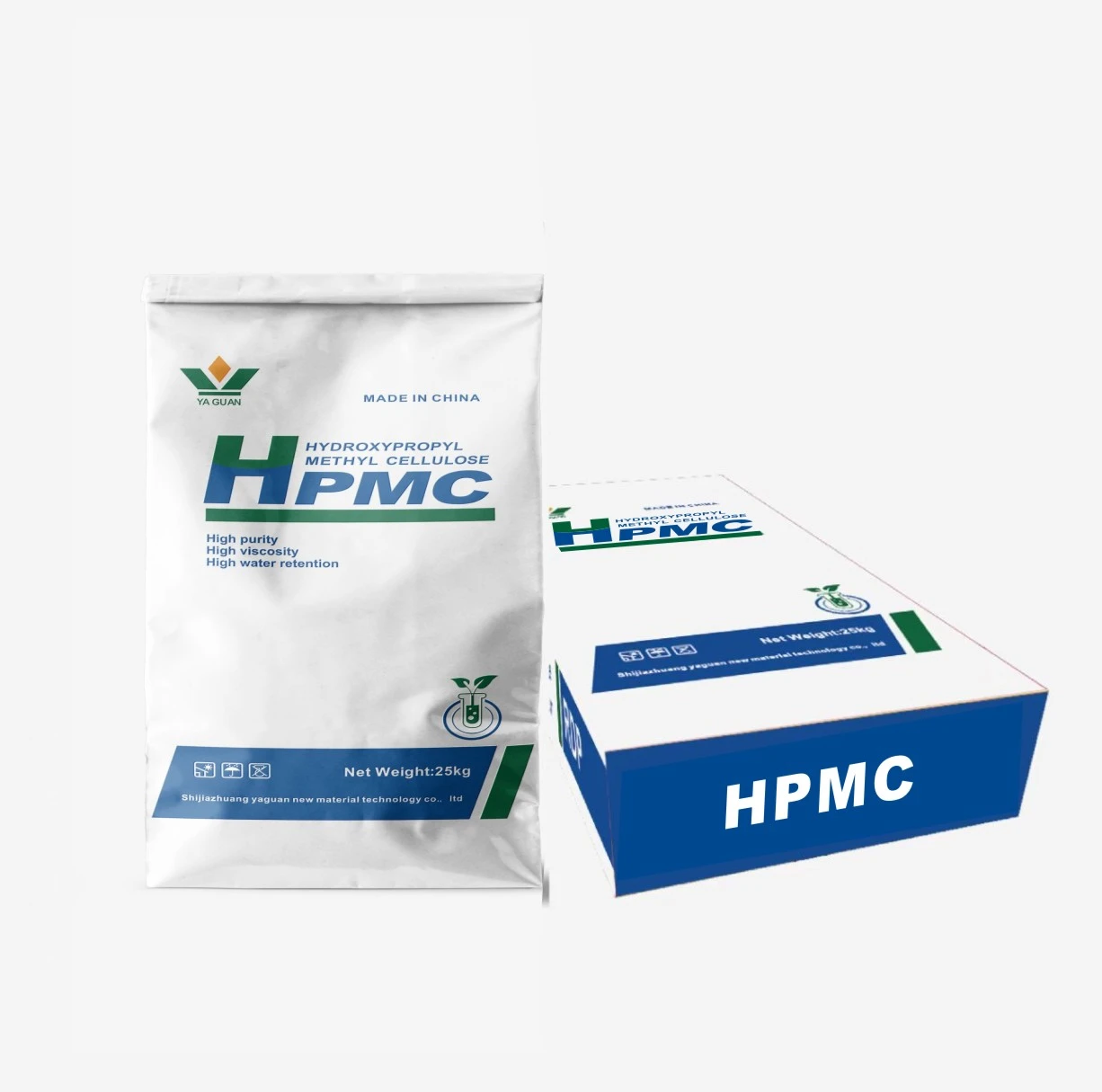


Understanding Hydroxypropyl Methyl Cellulose( HPMC): A B2B Perspective
In the realm of advanced material science, Hydroxypropyl Methyl Cellulose( HPMC) stands as a pivotal component, essential across a myriad of industrial applications. As a non-ionic cellulose ether derived from natural cellulose, HPMC is synthesized through a sophisticated chemical process involving etherification, yielding a versatile polymer known for its thickening, binding, film-forming, water-retaining, and protective colloid properties. This technical overview aims to provide B2B decision-makers and engineers with an in-depth understanding of HPMC's role, its manufacturing intricacies, market dynamics, and unparalleled advantages in various sectors.
Industry Trends and Market Dynamics for Hydroxypropyl Methyl Cellulose( HPMC)
The global market for Hydroxypropyl Methyl Cellulose( HPMC) is experiencing robust growth, driven primarily by expanding construction activities, increasing demand in the pharmaceutical and food industries, and advancements in personal care product formulations. Projections indicate a CAGR of approximately 5-7% over the next five years, with significant innovation focusing on tailored grades for specific applications. Key trends include a surge in demand for sustainable and eco-friendly additives, prompting manufacturers to optimize production processes for reduced environmental impact. Furthermore, the rise of specialized construction chemicals, particularly for dry-mix mortars, tile adhesives, and self-leveling compounds, continues to bolster HPMC consumption. The pharmaceutical sector's pivot towards controlled-release drug delivery systems also heavily relies on HPMC's unique film-forming and gelling properties.
Detailed Process Flow: Manufacturing of Hydroxypropyl Methyl Cellulose( HPMC)
The production of Hydroxypropyl Methyl Cellulose( HPMC) is a multi-stage chemical synthesis process, beginning with high-purity cellulose. The primary raw materials typically include refined cotton linter or wood pulp.
Manufacturing Process Steps:
-
1. Alkalization: Cellulose raw material is steeped in a strong caustic soda (NaOH) solution to produce alkali cellulose. This process opens up the cellulose structure, making it more reactive.
(Reaction: Cellulose-OH + NaOH → Cellulose-ONa + H₂O)
-
2. Etherification: The alkali cellulose is then reacted with methyl chloride (CH₃Cl) and propylene oxide (CH₂OCHCH₃) in a precisely controlled, high-pressure reactor. This introduces methoxyl and hydroxypropoxyl groups onto the cellulose backbone, forming HPMC. The degree of substitution (DS) and molar substitution (MS) are critical parameters controlled during this stage.
(Reaction: Cellulose-ONa + CH₃Cl → Cellulose-OCH₃ + NaCl; Cellulose-ONa + CH₂OCHCH₃ → Cellulose-O-CH₂CH(OH)CH₃ + NaOH)
- 3. Neutralization & Washing: After etherification, the crude HPMC is neutralized, typically with an acid, to remove residual alkali. It is then subjected to extensive hot water washing to remove impurities, by-products (like NaCl), and unreacted reagents. This step is crucial for product purity and quality.
- 4. Filtration & Drying: The purified HPMC slurry is filtered, and the wet cake is then dried using methods like fluid-bed drying or rotary drying to achieve the desired moisture content. Careful control of drying conditions prevents thermal degradation and ensures uniform particle size.
- 5. Grinding & Sieving: The dried HPMC is ground into fine powder and then sieved to obtain specific particle sizes, depending on the application requirements (e.g., fine powders for pharmaceuticals, coarser grades for construction).
- 6. Quality Control & Packaging: The final product undergoes rigorous testing to meet established quality standards (e.g., ISO, ASTM, USP, EP) before packaging. Parameters like viscosity, moisture content, pH, ash content, and particle size distribution are meticulously checked.
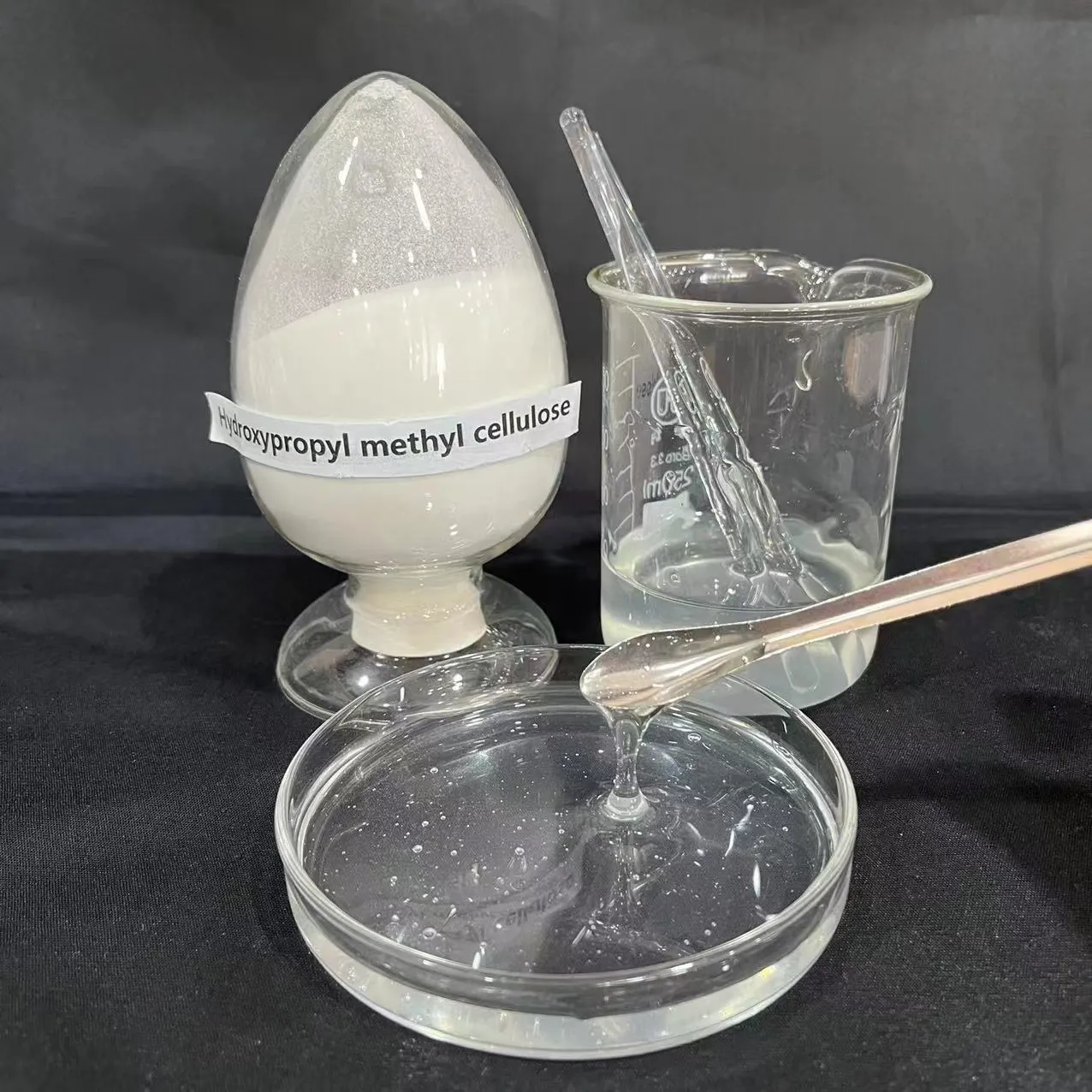
Throughout this process, stringent quality control measures are implemented to ensure the consistent performance and purity of Hydroxypropyl Methyl Cellulose( HPMC). Target industries such as construction, pharmaceuticals, and food rely on these precise manufacturing standards.
Technical Specifications and Performance Parameters
The efficacy of Hydroxypropyl Methyl Cellulose( HPMC) in diverse applications is dictated by its precise technical specifications. Key parameters include viscosity, degree of substitution (DS), molar substitution (MS), particle size, and solution pH. Manufacturers typically offer various grades optimized for specific functions.
Typical Product Specification Table for HPMC (Construction Grade)
| Parameter | Unit | Value Range | Testing Standard |
|---|---|---|---|
| Viscosity (2% Solution @ 20°C) | mPa·s | 400 - 200,000 | GB/T 28189, ASTM D1347 |
| Methoxyl Content | % | 19.0 - 24.0 | USP, EP |
| Hydroxypropoxyl Content | % | 4.0 - 12.0 | USP, EP |
| Moisture Content | % | ≤ 5.0 | ISO 7780 |
| Ash Content | % | ≤ 3.0 | USP, EP |
| pH (1% Solution) | - | 5.0 - 8.0 | Internal Method |
| Particle Size (80 mesh) | % | ≥ 98.0 | ASTM E11 |
The choice of HPMC grade significantly impacts the final product performance. For instance, high-viscosity grades are ideal for tile adhesives to prevent slippage, while low-viscosity grades are preferred for self-leveling compounds to ensure flowability.

Application Scenarios and Technical Advantages
Hydroxypropyl Methyl Cellulose( HPMC) offers a spectrum of technical advantages across diverse industrial applications, making it an indispensable additive.
Construction Industry
- Tile Adhesives: Enhances water retention, open time, and anti-sag properties, leading to stronger bonds and reduced tile slippage.
- Dry-Mix Mortars: Improves workability, consistency, and adhesion. Contributes to energy saving by enabling thinner application layers.
- Gypsum Products: Acts as a binder and thickener, improving surface finish and crack resistance.
- Self-Leveling Compounds: Controls rheology, preventing segregation and ensuring a smooth, level surface.
- Exterior Wall Insulation Systems (ETICS): Enhances adhesive strength, ensuring long-term durability and corrosion resistance against environmental factors.
Advantage: Improved workability, water retention, adhesion, and overall durability of construction materials.
Pharmaceutical Industry
- Tablet Coatings: Provides a smooth, protective, and easily digestible coating.
- Binder: Ensures tablet integrity and hardness.
- Controlled Release Matrices: Forms a gel barrier for sustained drug release, enhancing therapeutic efficacy and patient compliance.
- Ophthalmic Solutions: Lubricant and viscosity modifier for eye drops.
Advantage: Biocompatibility, non-toxicity, and precise control over drug release kinetics.
Food Industry
- Thickener & Stabilizer: In sauces, dressings, and dairy products.
- Emulsifier: Prevents phase separation in various food formulations.
- Film Former: Used in edible coatings for fruits and vegetables to extend shelf life.
Advantage: Enhances texture, stability, and extends product shelf life.
Personal Care & Cosmetics
- Thickener: In shampoos, conditioners, and lotions.
- Film Former: In hair sprays and mascaras, providing hold without stickiness.
- Emulsifier & Stabilizer: Improves product texture and consistency.
Advantage: Enhances rheology, sensory feel, and stability of cosmetic formulations.
Vendor Comparison and Customized Solutions
Selecting the right supplier for Hydroxypropyl Methyl Cellulose( HPMC) is critical for ensuring consistent product quality and supply chain reliability. Key considerations for vendor evaluation include product purity, consistency, technical support, and the ability to provide customized solutions.
Comparative Analysis of HPMC Vendors (Illustrative Data)
| Feature | Vendor A (e.g., Yaguan HPMC) | Vendor B (Competitor) | Vendor C (Competitor) |
|---|---|---|---|
| Certifications | ISO 9001, ISO 14001, KOSHER, HALAL, FDA-compliant | ISO 9001, HALAL | ISO 9001 |
| Customization Capability | High (Viscosity, MS/DS, Particle Size) | Medium (Viscosity, some particle sizes) | Low (Standard grades only) |
| Technical Support | Dedicated R&D, application engineers, formulation guidance | Basic product data sheets | Limited, post-sale inquiries only |
| Lead Time (Typical) | 7-14 days | 14-21 days | 21-30 days |
| Quality Consistency | Excellent (Batch-to-batch consistency >99%) | Good (Minor batch variations) | Moderate (Noticeable batch variations) |
For specialized applications, customized solutions are paramount. This involves tailoring the methoxyl and hydroxypropoxyl substitution ratios, adjusting polymerization degrees to control viscosity, and modifying particle size distribution. A reliable vendor, like Yaguan HPMC, with extensive R&D capabilities and a deep understanding of polymer chemistry, can work collaboratively to develop specific Hydroxypropyl Methyl Cellulose( HPMC) grades that meet unique performance requirements, offering significant competitive advantages to clients.

Application Case Studies: Real-World Impact of HPMC
The practical utility of Hydroxypropyl Methyl Cellulose( HPMC) is best exemplified through successful real-world applications.
Case Study 1: High-Performance Tile Adhesive for Large Format Tiles
A major European construction firm faced challenges with tile adhesives for large-format porcelain tiles, experiencing issues with open time, sag resistance, and long-term bond strength, especially in humid environments. By integrating a specialized high-viscosity Hydroxypropyl Methyl Cellulose( HPMC) grade, tailored for enhanced water retention and rheological control, the firm significantly improved the adhesive's performance. The modified formulation extended open time by 20%, reduced tile slippage by 50%, and increased ultimate bond strength by 15% (tested under EN 12004 standards). This resulted in faster installation times, reduced material waste, and superior finished quality, leading to a 10% reduction in overall project costs for tiling work.
Customer Feedback: "The HPMC grade provided by Yaguan was instrumental in achieving the desired performance for our demanding large-format tile projects. Its consistency and technical support were unmatched."
Case Study 2: Sustained-Release Pharmaceutical Formulation
A leading pharmaceutical company sought to develop a once-daily sustained-release tablet for a common cardiovascular drug, aiming to improve patient compliance and therapeutic profiles. Leveraging specific low-viscosity, high-purity pharmaceutical-grade Hydroxypropyl Methyl Cellulose( HPMC) as a matrix former, they successfully achieved a stable dissolution profile over a 24-hour period. In-vitro dissolution tests showed that the HPMC matrix provided reliable drug release kinetics within the USP specifications for sustained-release formulations. This development allowed the company to launch a new, more convenient dosage form, resulting in a 25% increase in market share for that drug category.
Partner Client: A major global pharmaceutical corporation. Years of service: 8+ years collaborating on various excipient solutions.
Trustworthiness: FAQ, Lead Time, Warranty, and Support
Ensuring client trust extends beyond product quality to encompass transparent processes and reliable support.
Frequently Asked Questions (FAQ) about HPMC
Lead Time & Fulfillment Details
Our standard lead time for HPMC orders typically ranges from 7 to 14 business days, depending on the specific grade and order volume. For custom formulations, lead times may be adjusted based on development and production schedules, usually communicated upfront. We maintain a robust supply chain and optimized logistics to ensure timely delivery globally. Expedited shipping options are available upon request.
Warranty Commitments
We stand by the quality of our Hydroxypropyl Methyl Cellulose( HPMC) products with a comprehensive warranty. All products are guaranteed to meet the specifications detailed in their respective Certificates of Analysis (CoA) for a period of 12 months from the date of manufacture, provided they are stored and handled according to our recommendations. In the unlikely event of a product failing to meet specified quality parameters, we commit to prompt investigation, replacement, or credit, ensuring minimal disruption to our clients' operations.
Customer Support Information
Our dedicated technical support team comprises experienced chemical engineers and application specialists ready to assist with product selection, formulation optimization, and troubleshooting. Support is available via phone, email, and online consultation platforms. We also offer on-site technical visits for complex integration challenges.
- Email: sales@yaguanhpmc.com
- Phone: +86-XXX-XXXX-XXXX (example)
- Website: www.yaguanhpmc.com

References
- Rowe, R. C., Sheskey, P. J., & Quinn, M. E. (2009). Handbook of Pharmaceutical Excipients. Pharmaceutical Press.
- U.S. Pharmacopeia and National Formulary (USP-NF). Hydroxypropyl Methylcellulose monograph.
- European Pharmacopoeia (Ph. Eur.). Hypromellose monograph.
- ASTM International Standards for Cellulose Ethers.
- Klemm, D., Philipp, B., Heinze, T., Wagenknecht, U., & Nehls, W. (2005). Comprehensive Cellulose Chemistry: Fundamentals and Applications. Wiley-VCH.