Understanding the Different Types of PVA
Polyvinyl alcohol (PVA) is a versatile synthetic polymer with a wide range of applications across various industries, including textiles, adhesives, paper, and pharmaceuticals. However, not all PVA is created equal. Different types of PVA are manufactured with varying properties tailored to specific needs. This article explores the key classifications of PVA, their characteristics, and common uses, helping you understand which grade is best suited for your application. Choosing the right PVA type is critical for achieving optimal performance and product quality.
PVA Classification Based on Degree of Hydrolysis
The degree of hydrolysis is arguably the most important factor in classifying PVA. Hydrolysis refers to the chemical reaction that breaks down the polyvinyl acetate (PVAc) precursor into PVA. The percentage of acetate groups removed determines the PVA’s properties. Generally, PVA is categorized into four main types based on its hydrolysis degree: 87-89%, 90-92%, 95-98%, and 99%+. Lower hydrolysis grades retain more acetate groups, making them more hydrophobic and offering better film-forming capabilities. Higher hydrolysis grades are more hydrophilic, enhancing their water solubility and adhesive properties.
Key Takeaway: The degree of hydrolysis directly impacts PVA’s solubility, film strength, and adhesion characteristics.
PVA Grades Based on Molecular Weight
Another crucial factor is the molecular weight of the PVA polymer. Molecular weight is typically expressed as the average degree of polymerization (DP) or the viscosity of a 4% aqueous solution. Lower molecular weight PVA generally results in lower viscosity solutions, making them easier to handle and process. Higher molecular weight PVA leads to higher viscosity solutions and contributes to increased film strength and toughness. PVA molecular weights can vary significantly, ranging from approximately 1,400 to over 100,000. Selecting the appropriate molecular weight depends on the intended application and desired solution viscosity.
Molecular Weight Benefits:
• Lower molecular weight: Easier processing, lower viscosity
• Higher molecular weight: Increased film strength, higher viscosity
• Provides flexibility in formulating different products.
Comparing Common PVA Types
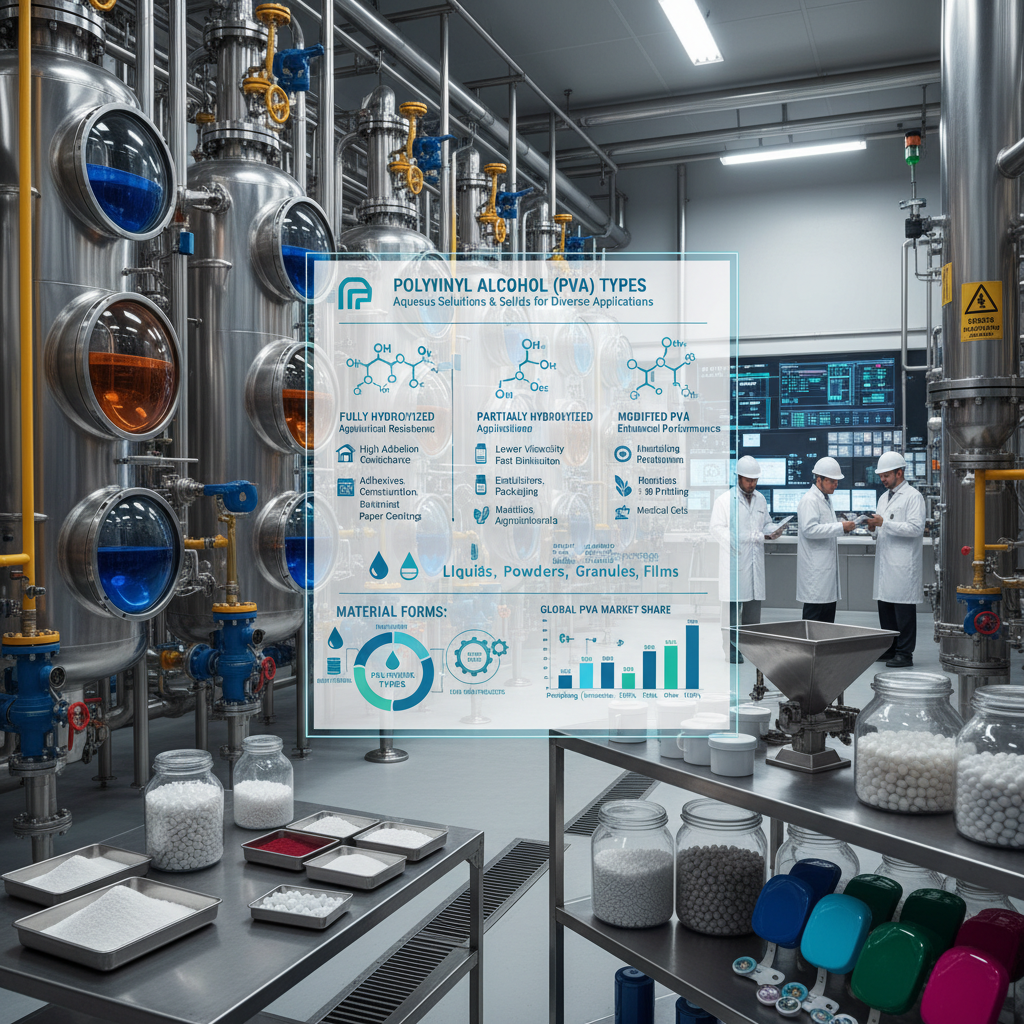
Here's a comparison of some common PVA types and their typical applications:
Specialty PVA Types
Beyond the core classifications, specialized PVA types are available, including:
- Acetylated PVA: Enhanced water resistance and adhesion.
- Cationic PVA: Modified for improved compatibility with anionic polymers, often used in paper coatings.
- Crosslinked PVA: Increased resistance to water and solvents, ideal for films and coatings.
Understanding these variations helps refine product formulations and optimize performance in diverse applications.
Selecting the Right PVA: Key Considerations
Choosing the most suitable PVA grade requires careful consideration of several factors:
- Application Requirements: What properties are essential for your specific application (e.g., water solubility, film strength, adhesion)?
- Hydrolysis Degree: Select a grade that balances hydrophobicity and hydrophilicity.
- Molecular Weight: Choose a molecular weight that provides the desired viscosity and film characteristics.
- Compatibility: Ensure the PVA is compatible with other ingredients in your formulation.
Contacting a reputable PVA supplier like Yaguan HPMC can provide expert guidance in selecting the optimal grade for your needs.
Conclusion
Understanding the different types of PVA is crucial for achieving optimal results in your applications. By considering factors like hydrolysis degree and molecular weight, you can select the grade that best meets your specific needs. Yaguan HPMC offers a comprehensive range of PVA products to suit a variety of industries and applications. Don’t hesitate to reach out for expert support in finding the perfect PVA solution.
Frequently Asked Questions (FAQs)
What is the difference between PVA and PVAc?
Polyvinyl acetate (PVAc) is the precursor to polyvinyl alcohol (PVA). PVAc is a hydrophobic polymer used in adhesives and paints. PVA is created by partially hydrolyzing PVAc, replacing some of the acetate groups with hydroxyl groups, making it more water-soluble. The degree of hydrolysis determines the properties of the resulting PVA, as described earlier. Therefore, PVAc is the starting material, while PVA is a modified version with enhanced water solubility and different application possibilities.
How is PVA typically packaged and stored?
PVA is typically packaged in multi-layered paper bags with an inner polyethylene liner to protect it from moisture. It should be stored in a cool, dry, and well-ventilated area, away from direct sunlight and heat sources. Proper storage is essential to prevent clumping and degradation of the polymer. Avoid storing PVA near strong oxidizing agents or reactive chemicals. The shelf life of PVA is generally 2-3 years when stored correctly.
Can PVA be used in biodegradable films?
Yes, PVA is considered a water-soluble and biodegradable polymer. However, its biodegradation rate depends on the degree of hydrolysis and the environmental conditions. Higher hydrolysis grades tend to biodegrade more readily. PVA films are increasingly used in applications like packaging and agricultural films where biodegradability is desired. The breakdown process is facilitated by microorganisms in soil and water.
What safety precautions should be taken when handling PVA?
PVA is generally considered non-toxic and safe to handle. However, it's always recommended to wear appropriate personal protective equipment (PPE) such as gloves and safety glasses to prevent dust inhalation or skin irritation. Avoid creating excessive dust during handling. In case of eye contact, rinse thoroughly with water. Refer to the Safety Data Sheet (SDS) for detailed safety information and handling procedures.